






Choosing a p-tau 181 Kit: Key Features for Consistent and Reproducible Research Results
Accurate biomarker measurement is essential for research into Alzheimer’s disease and other neurodegenerative conditions. Among the biomarkers receiving considerable attention is phosphorylated tau 181 (p-tau 181), a modified form of the tau protein associated with Alzheimer’s-related biological changes. Researchers measure this marker to investigate tau pathology, evaluate biomarker relationships, and explore potential applications in disease research.
Selecting an appropriate p-tau 181 kit is an important step toward generating dependable laboratory data. The choice involves more than comparing product specifications or detection technologies. Researchers should consider analytical sensitivity, antibody specificity, sample compatibility, precision, calibration, and quality-control requirements to ensure that the selected assay meets the needs of the intended study.
Understanding p-tau 181 and Its Research Significance
Tau is a protein found primarily in neurons, where it helps stabilize microtubules and maintain cellular structure. Microtubules support the transport of materials within nerve cells and contribute to normal neuronal function.
Tau can undergo phosphorylation, a natural biochemical process in which phosphate groups are added to the protein. One phosphorylation site of particular interest is threonine 181. When tau is phosphorylated at this position, it is commonly referred to as p-tau 181.
Abnormal tau phosphorylation is associated with Alzheimer’s disease and other neurological research areas. Scientists investigate p-tau 181 because its levels in cerebrospinal fluid and blood may reflect biological processes associated with Alzheimer’s pathology.
A reliable measurement method helps researchers examine these changes and compare results across samples, experimental groups, and study time points.
Why Choosing the Right p-tau 181 Kit Matters
Research findings are only as reliable as the methods used to generate them. Differences in assay design, antibody performance, sample preparation, and calibration can influence measured concentrations.
An unsuitable assay may produce inconsistent measurements, insufficient sensitivity, or results that are difficult to compare with other studies.
Choosing an appropriate kit helps laboratories address several important objectives:
- Detect p-tau 181 at concentrations relevant to the research application.
- Distinguish the intended phosphorylated target from related proteins.
- Generate consistent measurements across repeated experiments.
- Support appropriate sample types and laboratory workflows.
- Provide sufficient analytical range for the study population.
- Maintain quality through calibration and control procedures.
The selected kit should therefore be evaluated as part of the complete analytical process rather than as an isolated reagent product.
Essential Features to Evaluate When Selecting a p-tau 181 Kit
Several technical characteristics can help researchers assess whether a kit is suitable for their laboratory requirements.
1. Analytical Sensitivity
Analytical sensitivity describes an assay’s ability to detect low concentrations of its target analyte.
This characteristic is particularly important for p-tau 181 because concentrations can be low in certain biological samples, especially blood-based specimens.
Researchers should review the following performance parameters:
- Limit of blank (LoB): The highest apparent analyte concentration expected in samples without the target.
- Limit of detection (LoD): The lowest concentration that can be distinguished from the blank with defined confidence.
- Limit of quantification (LoQ): The lowest concentration that can be measured with acceptable precision and accuracy.
- Measurement range: The concentration interval over which the assay provides reliable quantitative results.
A kit with appropriate sensitivity should be able to measure the expected concentration range in the intended sample type.
2. Antibody Specificity
Antibody specificity is fundamental to reliable p-tau 181 detection.
The assay should recognize tau phosphorylated at threonine 181 rather than responding substantially to non-phosphorylated tau or unrelated proteins.
Researchers should examine whether the kit has been evaluated for:
- Cross-reactivity with non-phosphorylated tau.
- Recognition of other phosphorylated tau forms.
- Interference from related proteins.
- Potential nonspecific antibody binding.
Good antibody specificity helps ensure that the measured signal represents the intended target rather than a mixture of related molecular forms.
3. Precision and Reproducibility
Precision describes how closely repeated measurements agree under specified conditions.
For research laboratories, this is important because experiments may involve multiple testing sessions, operators, reagent batches, or instruments.
Common precision assessments include:
Intra-assay precision: Evaluates variation among replicate measurements within the same run.
Inter-assay precision: Examines variation between different runs or testing days.
Inter-laboratory reproducibility: Assesses whether results remain comparable when testing is performed at different locations.
Researchers should review precision data at concentrations relevant to their experiments, rather than relying on a single overall performance figure.
4. Accuracy and Recovery
Accuracy concerns how closely a measured result reflects an appropriate reference value.
Recovery studies can help assess whether the assay measures added analyte appropriately in a particular sample matrix.
For example, researchers may evaluate how well known quantities of p-tau 181 are recovered after being added to representative biological samples.
These studies can help identify matrix-related effects and potential measurement bias.
5. Sample Compatibility
Not every immunoassay is suitable for every biological sample type.
P-tau 181 may be investigated in:
- Cerebrospinal fluid (CSF)
- Plasma
- Serum
These sample types have different compositions and may affect assay performance in different ways.
A kit validated for plasma should not automatically be assumed suitable for serum or CSF. Researchers should confirm the manufacturer’s sample requirements, collection procedures, storage conditions, and validation data before starting experiments.
Understanding Different p-tau 181 Detection Technologies
Several immunoassay technologies can be used to investigate p-tau 181. Understanding their detection principles helps researchers select a method that fits their experimental design.
Enzyme-Linked Immunosorbent Assay
Enzyme-linked immunosorbent assay (ELISA) uses antibodies to capture and recognize the target protein. An enzyme-based reaction generates a measurable signal, which is used to estimate analyte concentration.
ELISA is widely used in research laboratories because it supports structured protein measurement workflows. Its performance depends on assay design, antibody quality, sample preparation, and validation.
Chemiluminescence Immunoassay
Chemiluminescence immunoassay (CLIA) uses antibody-based target recognition and a chemical reaction that produces light.
An appropriate analyzer measures the emitted light, and the signal is interpreted using a calibration system.
Depending on the assay design, CLIA can support sensitive quantitative measurements and automated workflows. Researchers should verify that the specific p-tau 181 reagent system is compatible with the selected analyzer.
Electrochemiluminescence Immunoassay
Electrochemiluminescence immunoassay uses an electrically initiated light-emitting reaction to generate a measurable signal.
This approach is used in various laboratory testing applications. Its suitability for p-tau 181 research depends on the validated assay characteristics and the instrument platform.
The Importance of Calibration and Quality Control
Even a well-designed kit requires appropriate calibration and quality-control procedures.
Calibration establishes the relationship between the assay’s measured signal and the concentration of p-tau 181. Without an appropriate calibration system, quantitative results may not be reliable.
Calibration Materials
Researchers should review the source, composition, and assigned values of the kit’s calibrators.
The calibration range should cover the concentrations expected in the intended samples. Laboratories should also follow the specified recalibration schedule and procedures.
Internal Quality Controls
Quality-control samples help monitor assay performance during routine testing.
Where possible, laboratories should use control materials at different concentration levels to evaluate performance across the analytical range.
Unexpected control results may indicate problems involving reagents, calibration, instruments, or sample processing.
External Quality Assessment
External quality assessment can help laboratories compare their analytical performance with other participating facilities.
Where suitable programs are available, participation may reveal differences between methods and support ongoing quality improvement.
Documentation
Maintaining detailed records helps researchers identify sources of variation and reproduce experiments.
Important records include:
- Reagent lot numbers and expiration dates.
- Calibration results.
- Internal quality-control measurements.
- Sample collection and storage conditions.
- Instrument maintenance records.
- Deviations from established procedures.
Sample Preparation and Handling Considerations
Sample quality can have a substantial influence on p-tau 181 measurements.
Even when a kit demonstrates good analytical performance, inconsistent sample handling may introduce variation and affect the interpretation of results.
Consistent Collection Procedures
Researchers should establish standardized sample collection protocols for all study participants or experimental groups.
The collection method, sample container, processing time, and handling conditions should follow the validated assay requirements.
Appropriate Storage Conditions
Temperature and storage duration can influence protein stability.
Laboratories should follow the manufacturer’s instructions and avoid assuming that repeated freeze-thaw cycles are acceptable. When sample stability is uncertain, it should be evaluated experimentally.
Avoiding Sample Interference
Biological samples may contain substances that affect immunoassay performance.
Potential interferents include hemoglobin from hemolysis, lipids, bilirubin, heterophilic antibodies, and other matrix components.
Researchers should review the kit’s interference data and consider additional validation when working with unusual or complex samples.
Choosing a Kit for Different Research Applications
The most suitable p-tau 181 assay depends on the scientific question and the intended sample type.
Alzheimer’s Disease Biomarker Research
For Alzheimer’s biomarker studies, researchers may measure p-tau 181 alongside amyloid-beta markers and other tau-related proteins.
The selected assay should provide sufficient sensitivity and specificity for the expected sample concentrations.
Blood-Based Biomarker Studies
Blood-based research is attracting attention because plasma and serum collection can be more convenient than obtaining cerebrospinal fluid.
However, blood samples present analytical challenges due to their complex composition and potentially low p-tau 181 concentrations.
Researchers should prioritize assays with documented validation for the specific blood-based sample type.
Longitudinal Studies
Longitudinal studies involve repeated measurements over time.
Consistency between testing sessions is especially important because researchers may interpret changes in biomarker concentration as part of a biological trend.
Using consistent procedures, compatible reagent lots, and documented calibration practices can help reduce analytical variation.
Comparative Research
Some studies compare results from different laboratories, platforms, or assay methods.
In these cases, researchers should consider method-comparison data and possible differences in antibodies, calibrators, and analytical ranges.
Results from different platforms should not be treated as interchangeable without suitable validation.
Evaluating the Complete Laboratory Workflow
A p-tau 181 kit should fit the laboratory’s broader workflow, including sample preparation, testing, result interpretation, and quality management.
Before selecting a kit, researchers should consider the following practical factors:
| Evaluation area | Questions to consider |
|---|---|
| Sample requirements | Which biological sample types are validated? |
| Analytical sensitivity | Can the kit measure expected concentrations? |
| Specificity | Does it distinguish p-tau 181 from related tau forms? |
| Precision | Are intra-assay and inter-assay results consistent? |
| Measurement range | Does the range cover the intended samples? |
| Workflow | Are the required procedures practical for the laboratory? |
| Calibration | Are suitable calibrators and instructions provided? |
| Quality control | Can assay performance be monitored consistently? |
| Compatibility | Does the kit work with the available instrument, if applicable? |
| Technical support | Are instructions, training, and troubleshooting resources available? |
Evaluating these factors together can help laboratories avoid selecting a kit based on a single attractive specification.
The Role of Automated Chemiluminescence Analyzers
Automated analyzers can support standardized immunoassay workflows by controlling steps such as reagent dispensing, incubation, washing, and signal detection.
In CLIA-based testing, automation may reduce some sources of manual variation and help laboratories process samples more consistently.
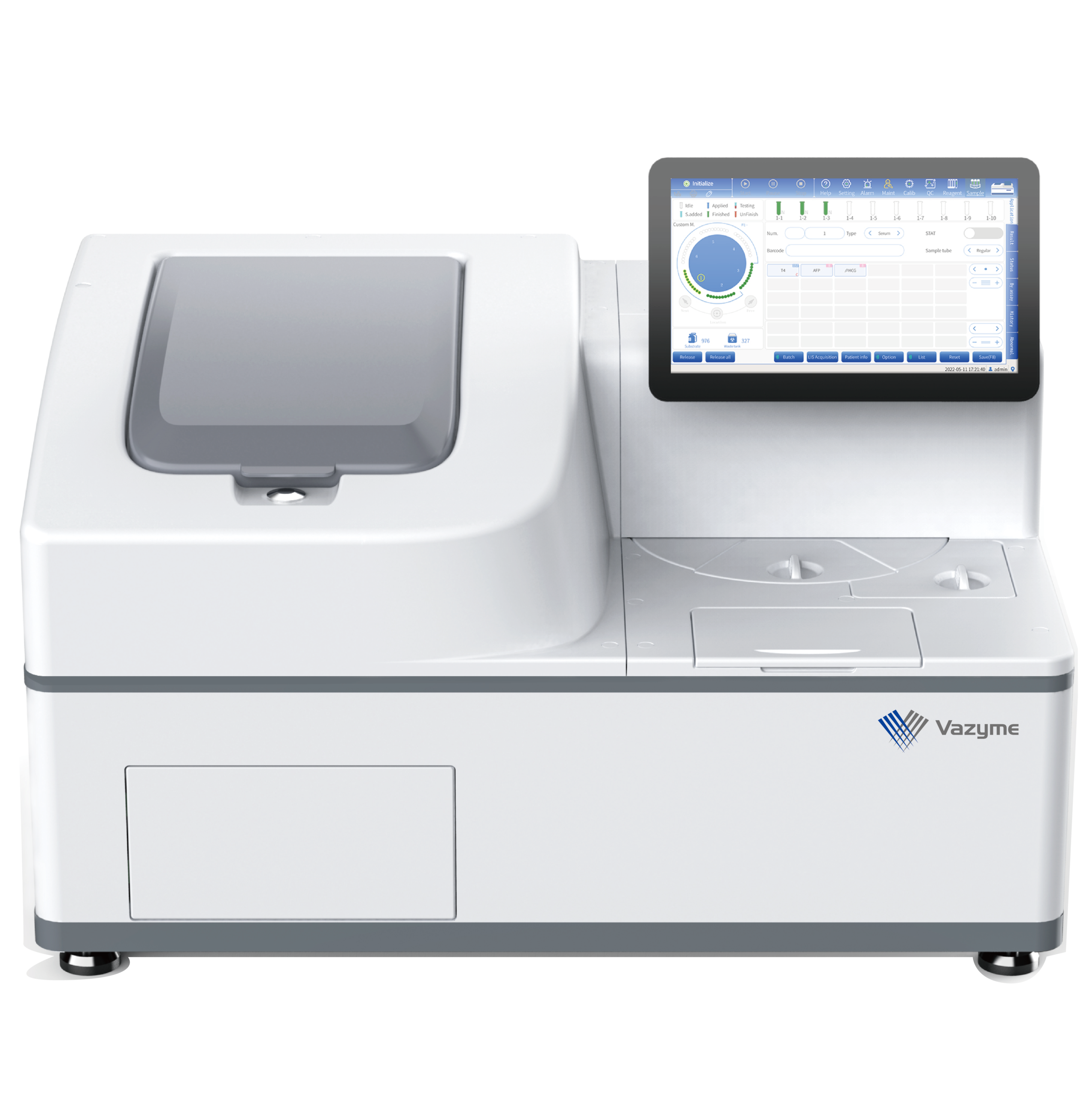
When considering a platform such as the Shine i2910 Chemiluminescence Immunoassay Analyzer, laboratories should first confirm that a compatible p-tau 181 assay is available and validated for their intended application.
Important considerations include:
- Compatibility with the required reagent system.
- Supported sample types and assay protocols.
- Analytical performance of the complete assay.
- Testing capacity and workflow requirements.
- Calibration and quality-control procedures.
- Maintenance and technical support.
An analyzer’s general chemiluminescence capabilities do not automatically establish that it can perform a particular p-tau 181 test. Instrument and reagent compatibility must be confirmed.
Common Mistakes to Avoid When Selecting a p-tau 181 Kit
Careful evaluation can prevent problems that may compromise research results.
Choosing based only on sensitivity: A low detection limit is useful, but it does not replace the need to assess specificity, precision, accuracy, and sample compatibility.
Ignoring sample validation: A kit may perform differently across plasma, serum, and CSF.
Overlooking cross-reactivity: Insufficient specificity can affect the interpretation of measured concentrations.
Using inconsistent procedures: Differences in sample handling, incubation, and reagent preparation can introduce avoidable variation.
Comparing results without method validation: Measurements from different platforms may not be directly comparable.
Neglecting quality control: Regular monitoring is necessary to identify analytical problems before they affect study conclusions.
Future Developments in p-tau 181 Testing
Research into Alzheimer’s biomarkers continues to advance, creating opportunities to improve p-tau 181 measurement.
Improved Assay Sensitivity
Developments in antibody engineering and signal detection may help researchers measure low-abundance biomarkers more reliably.
Greater Standardization
Improved reference materials, calibration approaches, and quality-assessment procedures may support better comparability across laboratories.
Multiplex Biomarker Testing
Measuring p-tau 181 alongside other biomarkers may provide a broader view of Alzheimer’s-related biological processes.
Expanded Blood-Based Research
Blood-based biomarker studies may become increasingly important as researchers evaluate methods that are practical for larger populations and repeated measurements.
These developments will depend on continued analytical validation and careful assessment of how each biomarker performs in its intended research setting.
Conclusion
Choosing a suitable p-tau 181 kit requires a comprehensive assessment of analytical sensitivity, antibody specificity, precision, accuracy, sample compatibility, calibration, and quality-control requirements.
The most appropriate option is not necessarily the kit with the lowest detection limit or the most advanced detection technology. It is the assay that demonstrates reliable performance for the intended sample type and research application.
By evaluating the complete analytical workflow, standardizing sample handling, and monitoring assay performance, laboratories can improve the consistency and reproducibility of p-tau 181 measurements. These practices help generate dependable research data and support ongoing investigations into Alzheimer’s disease and tau-related neurodegeneration.