





What Factors Determine the Accuracy and Reliability of Modern Rapid Diagnostic Tests?
Rapid diagnostic tests have become valuable tools in healthcare because they provide timely information that can support the identification of infectious diseases and other medical conditions. Their convenience makes them useful in hospitals, clinics, laboratories, pharmacies, and certain home-testing environments. However, a quick result is only valuable when the test can detect its intended target consistently and produce information that can be interpreted correctly.
The reliability of a diagnostic product depends on several factors, including its design, testing technology, sample quality, and manufacturing standards. Selecting a High Accuracy Rapid Diagnostic solution involves looking beyond the speed of result delivery and evaluating how well the test performs under its intended conditions. Understanding these factors helps healthcare professionals and testing providers make informed decisions about diagnostic products.
Understanding Diagnostic Accuracy and Reliability
Accuracy and reliability are related concepts, but they describe different aspects of test performance.
Diagnostic accuracy refers to how effectively a test identifies the presence or absence of a specific target compared with an appropriate reference method. It is commonly evaluated through sensitivity and specificity.
Diagnostic reliability refers to the consistency of test performance when procedures are repeated under comparable conditions. A reliable test should produce dependable results when used according to its instructions.
Several performance indicators help explain these concepts:
- Sensitivity: The proportion of people with the target condition who receive a positive result.
- Specificity: The proportion of people without the target condition who receive a negative result.
- Positive predictive value: The likelihood that a person with a positive result actually has the condition.
- Negative predictive value: The likelihood that a person with a negative result does not have the condition.
- Reproducibility: The ability to obtain consistent results across repeated tests or different testing environments.
These measurements provide a more complete understanding of diagnostic performance than result speed alone.
1. Quality of Test Design and Technology
The underlying technology plays a major role in determining how accurately a rapid diagnostic test detects its intended target.
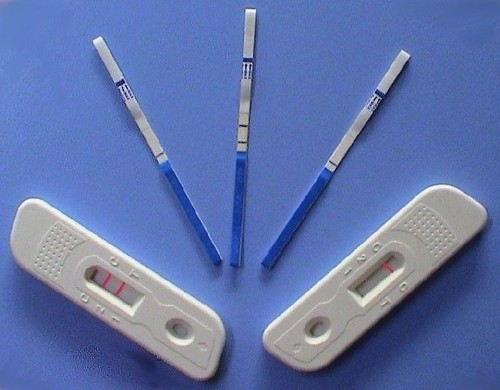
Many rapid tests use lateral flow immunoassay technology. These devices commonly contain antibodies or other recognition molecules that interact with specific antigens or antibodies in a sample.
The quality of these biological components affects how effectively the test identifies the target and distinguishes it from unrelated substances.
Important design considerations include:
- Specificity of the recognition molecules.
- Stability of reagents during storage.
- Consistency of membrane materials.
- Sensitivity of the detection system.
- Clarity of control and test indicators.
- Resistance to interference from unrelated sample components.
A well-designed test should balance sensitivity and specificity while remaining practical for its intended testing environment.
2. Sensitivity and Specificity of the Test
Sensitivity and specificity are two of the most important indicators used to evaluate diagnostic performance.
Importance of Sensitivity
A highly sensitive test is more likely to identify individuals who have the condition being investigated. This can be particularly important when early detection is a priority.
Low sensitivity may result in false-negative findings, meaning an infected individual could receive a negative result despite having the condition.
Importance of Specificity
Specificity measures how effectively a test avoids identifying the target in individuals who do not have the condition.
Low specificity can increase false-positive results, potentially leading to unnecessary concern or additional testing.
Balancing Both Measurements
A diagnostic product should be evaluated according to the clinical purpose for which it is intended. Some testing situations place greater emphasis on sensitivity, while others require particularly strong specificity.
Neither measurement should be considered independently when assessing overall diagnostic performance.
3. Sample Collection and Handling
Even a technically advanced test can produce unreliable results when the sample is collected or handled incorrectly.
Rapid diagnostic products may accept different specimen types, including whole blood, serum, plasma, nasal swabs, saliva, or urine. Each sample type has specific collection and preparation requirements.
Common factors affecting sample quality include:
- Incorrect collection techniques.
- Insufficient sample volume.
- Contamination during handling.
- Improper storage temperature.
- Delays before testing.
- Use of an unsuitable specimen type.
Following the manufacturer’s instructions helps reduce these risks. Healthcare professionals should also use appropriate collection materials and maintain suitable hygiene procedures.
4. Timing of Testing
The timing of a diagnostic test can significantly influence whether a target is detectable.
Infectious diseases often develop through different stages. During early infection, the concentration of viral antigens or antibodies may be below the detection threshold of a particular test.
For example, an antigen test may be less likely to detect an infection before sufficient antigen has accumulated. An antibody test may also produce a negative result before the immune system has generated a detectable antibody response.
Other factors, such as the progression of illness and the timing of sample collection, can influence the outcome.
For this reason, a negative rapid test does not always rule out infection. Repeat testing or laboratory confirmation may be recommended when symptoms or exposure history indicate continued concern.
5. Manufacturing Standards and Quality Control
Manufacturing consistency is essential for producing diagnostic tests that perform reliably across different batches.
Even small variations in reagent concentration, membrane quality, assembly, or packaging can affect test performance. Manufacturers therefore need structured quality-control procedures throughout production.
Important quality measures include:
Raw Material Inspection
Biological reagents, membranes, buffers, and other components should meet established specifications before entering production.
Production Process Control
Manufacturing procedures should be standardized to reduce variation between individual products and production batches.
Batch Testing
Representative products from production batches should undergo appropriate testing to verify that they meet established performance criteria.
Packaging and Stability Evaluation
Packaging should protect the test components from environmental conditions that could affect their performance. Stability studies help determine appropriate storage requirements and expiration dates.
Documentation and Traceability
Production records and batch identification systems support quality monitoring and help manufacturers investigate potential product issues.
6. Storage Conditions and Shelf Life
Rapid diagnostic tests often contain biological reagents that may be affected by temperature, humidity, and prolonged environmental exposure.
Incorrect storage can reduce reagent activity and compromise the reliability of the final result.
Users should consider the following practices:
- Store kits within the temperature range specified by the manufacturer.
- Keep products in their original packaging until use.
- Avoid exposure to excessive heat or moisture.
- Check expiration dates before testing.
- Do not use damaged or improperly sealed packaging.
- Follow any instructions regarding refrigeration or room-temperature equilibration.
Proper storage helps maintain the intended performance of the test throughout its stated shelf life.
7. User Training and Test Procedure
The person performing a rapid test can influence its final result. Incorrect sample application, reagent handling, or reading time may lead to invalid or misleading findings.
Clear instructions are therefore an important part of diagnostic reliability.
Users should understand:
- Which sample type is appropriate.
- How much sample should be applied.
- Whether additional buffer is required.
- How long the test must develop.
- When the result should be read.
- How to recognize positive, negative, and invalid outcomes.
Training is particularly important in settings where tests are performed by different healthcare workers or outside centralized laboratories.
8. Environmental Conditions During Testing
Environmental factors can affect how certain rapid tests function.
Temperature and humidity may influence the movement of liquid across the testing membrane and the activity of biological reagents. Testing outside the recommended environmental range can affect the clarity or reliability of the result.
Lighting conditions may also influence visual interpretation, particularly when test indicators are faint.
To reduce these risks, testing should take place in a clean environment that meets the manufacturer’s operating requirements.
9. Cross-Reactivity and Interference
A reliable diagnostic test must distinguish its intended target from unrelated substances that may be present in a sample.
Cross-reactivity occurs when a test component interacts with a substance other than the intended target. This can sometimes contribute to false-positive findings.
Other forms of interference may result from sample characteristics, medications, or substances that affect the detection process.
Manufacturers evaluate potential interference during product development and validation. Reviewing available performance information helps users understand the conditions under which a test has been assessed.
10. Independent Validation and Regulatory Compliance
Product claims should be supported by appropriate performance studies and documentation.
Validation helps establish whether a test is suitable for its intended purpose. Depending on the product and jurisdiction, this may involve comparisons with established reference methods, clinical evaluations, analytical performance studies, and manufacturing assessments.
When evaluating a diagnostic product, healthcare providers should consider:
- Whether the product is authorized or registered where required.
- Whether performance claims are supported by appropriate studies.
- Whether the intended use is clearly defined.
- Whether instructions and limitations are documented.
- Whether manufacturing quality systems meet applicable requirements.
Regulatory status and validation evidence provide important context, but users should still follow the specific instructions and limitations of each product.
Common Reasons Rapid Diagnostic Tests Produce Inaccurate Results
Understanding potential sources of error helps healthcare providers reduce testing problems.
| Potential Issue | Possible Effect | Recommended Practice |
|---|---|---|
| Incorrect sample collection | Insufficient or unsuitable material | Follow collection instructions |
| Testing too early | Target may not be detectable | Consider timing and repeat testing |
| Expired test kit | Reduced reagent performance | Check expiration dates |
| Improper storage | Degradation of test components | Maintain recommended conditions |
| Incorrect sample volume | Abnormal test development | Use the specified quantity |
| Reading too early or late | Misinterpretation of indicators | Follow the stated reading window |
| Contamination | Interference with results | Maintain clean handling procedures |
Addressing these factors can improve consistency and reduce preventable testing errors.
How to Choose a Reliable Rapid Diagnostic Test
Selecting an appropriate product requires a combination of technical evaluation and practical considerations.
Identify the Intended Testing Purpose
Confirm which disease, antigen, antibody, or other target the test is designed to detect. A product should only be used for its stated purpose.
Review Performance Information
Examine sensitivity, specificity, validation results, and any available limitations. Avoid relying solely on general claims about accuracy.
Evaluate Ease of Use
Clear instructions, appropriate sample materials, and easy-to-read indicators can reduce procedural mistakes.
Check Storage and Handling Requirements
Make sure the available testing environment can meet the product’s storage and operating conditions.
Consider Supplier Quality
Choose suppliers that provide clear product documentation, manufacturing information, and appropriate technical support.
The Future of Rapid Diagnostic Testing
Diagnostic technology continues to develop through improvements in biological reagents, detection systems, material engineering, and digital result interpretation.
Newer platforms are increasingly focused on improving analytical sensitivity, reducing interference, and making testing procedures more accessible. Digital readers and automated interpretation systems may also help reduce inconsistencies associated with visual result assessment.
At the same time, product validation, manufacturing quality, and correct use will remain essential. Technological improvements are most valuable when supported by reliable evidence and appropriate quality assurance.
Conclusion
The accuracy and reliability of modern rapid diagnostic tests depend on several interconnected factors, including test design, sensitivity, specificity, sample quality, testing time, manufacturing standards, and user technique.
A dependable diagnostic product must perform consistently under its intended conditions and provide clear information about its capabilities and limitations. By evaluating these factors carefully and following recommended procedures, healthcare professionals can use rapid tests more effectively as part of a broader diagnostic process.