






Common Materials Used in Water Lubricated Bearing Manufacturing
Introduction
Water-lubricated bearings are important components in modern marine and industrial machinery. They support rotating shafts, reduce friction, and help maintain smooth mechanical movement in environments where water is available as the primary lubrication medium. Unlike conventional bearings that depend on oil or grease, these systems use water to create a lubricating film between moving surfaces.
However, the performance and durability of these bearings depend heavily on the materials used during manufacturing. Since they operate under continuous water exposure, their materials must offer suitable wear resistance, dimensional stability, low friction, and compatibility with different water conditions. Manufacturers select materials according to operating loads, shaft speeds, temperatures, and application requirements. Understanding the most common materials can help engineers choose appropriate bearing solutions.
1. Rubber
Rubber is one of the most widely used materials in water-lubricated bearing manufacturing, particularly for marine applications. Its flexibility, water resistance, and ability to accommodate minor shaft misalignment make it suitable for supporting rotating shafts.
Rubber bearing liners can also absorb vibration and reduce noise during equipment operation. These properties are especially valuable in marine propulsion systems, where smooth shaft movement is important.
Different rubber compounds are available depending on the application. Manufacturers must consider water temperature, chemical exposure, mechanical loading, and expected service life when selecting a suitable compound.
2. Polyurethane
Polyurethane is another important material used in specialized bearing applications. It offers a combination of elasticity, abrasion resistance, and mechanical strength.
These properties make polyurethane suitable for environments where bearing surfaces may experience repeated friction or contact with suspended particles. Depending on its formulation, it can provide good resistance to wear and maintain its mechanical properties during continuous operation.
Polyurethane is particularly useful in selected industrial and water-handling applications. However, its suitability depends on temperature limits, water chemistry, hardness, and the specific mechanical requirements of the bearing.
3. High-Performance Engineering Plastics
Engineering plastics are increasingly used in modern bearing manufacturing because they offer lightweight construction, corrosion resistance, and favorable friction characteristics.
Materials such as UHMWPE, commonly known as ultra-high-molecular-weight polyethylene, are valued for their abrasion resistance and low-friction properties. They can be suitable for applications involving water exposure and moderate mechanical loads.
Other specialized thermoplastics may also be considered depending on the operating environment. Manufacturers evaluate factors such as water absorption, dimensional stability, creep resistance, and temperature tolerance before selecting a plastic material.
4. Composite Materials
Composite materials combine two or more materials to achieve performance characteristics that may be difficult to obtain from a single material.
In water-lubricated bearing manufacturing, polymer-based composites may incorporate reinforcing fibers, fillers, or other additives to improve stiffness, wear resistance, and load-bearing capacity.
These materials can be engineered for demanding applications where conventional rubber or plastic materials may not provide sufficient mechanical strength.
Composite bearings are useful in selected marine, industrial, and water treatment systems. Their performance depends on the composition, manufacturing process, and compatibility with the operating environment.
5. Bronze
Bronze is a metal alloy traditionally used in various bearing applications because of its mechanical strength, machinability, and corrosion resistance in suitable environments.
Certain bronze grades can provide reliable structural support and are used in specialized water-related machinery. However, not every bronze alloy is equally suitable for continuous water exposure.
Manufacturers must consider seawater compatibility, galvanic corrosion, shaft material, and operating conditions. Appropriate material pairing and protective measures are important for achieving long-term performance.
6. Stainless Steel
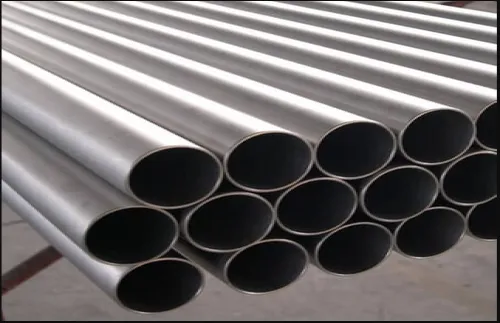
Stainless steel is commonly used for structural and supporting components in water-lubricated bearing assemblies. Its strength and corrosion resistance make it useful in marine and industrial equipment.
Different stainless steel grades provide different levels of corrosion protection. For example, marine environments may require carefully selected grades because seawater contains chloride ions that can contribute to corrosion.
Stainless steel may be used for bearing housings, sleeves, shafts, and other supporting parts rather than as the primary sliding bearing surface. Its selection should account for load requirements and compatibility with surrounding materials.
7. Ceramic Materials
Ceramic materials are used in specialized bearing applications where hardness, wear resistance, and chemical stability are important.
Certain technical ceramics can withstand abrasive conditions and provide excellent resistance to corrosion. They may be considered for applications involving challenging water chemistry or demanding operating environments.
However, ceramics are generally less tolerant of impact and sudden mechanical stress than many polymer-based materials. Their brittleness and manufacturing costs must therefore be evaluated before use.
Factors to Consider When Selecting Bearing Materials
Choosing the right material requires understanding the complete operating environment rather than focusing on a single property.
Important considerations include:
- Water compatibility: Ensure the material can withstand freshwater, seawater, or industrial water.
- Wear resistance: Consider friction, abrasive particles, and continuous operating conditions.
- Load capacity: Select materials capable of supporting expected mechanical forces.
- Temperature tolerance: Check whether the material maintains its properties at operating temperatures.
- Dimensional stability: Evaluate swelling, water absorption, and deformation.
- Maintenance requirements: Consider inspection frequency and expected replacement intervals.
The right combination of materials can improve bearing reliability, reduce premature wear, and support consistent machinery performance.
Importance of Material Quality in Manufacturing
Material quality directly influences the service life and operating efficiency of water-lubricated bearings. Even a well-designed bearing can experience premature failure if unsuitable raw materials or inconsistent manufacturing processes are used.
Businesses researching industrial bearing technologies and component solutions can explore the technical resources provided by Techemer to better understand material considerations and engineering requirements.
Conclusion
Rubber, polyurethane, engineering plastics, composites, bronze, stainless steel, and technical ceramics are among the materials used in water-lubricated bearing manufacturing. Each offers different advantages depending on the application’s mechanical and environmental demands.
Selecting the appropriate material requires careful consideration of water quality, load capacity, friction, temperature, and corrosion resistance. With suitable material selection and manufacturing practices, water-lubricated bearings can provide dependable performance in marine and industrial equipment.