





Natural Ways to Support Everyday Skin Health
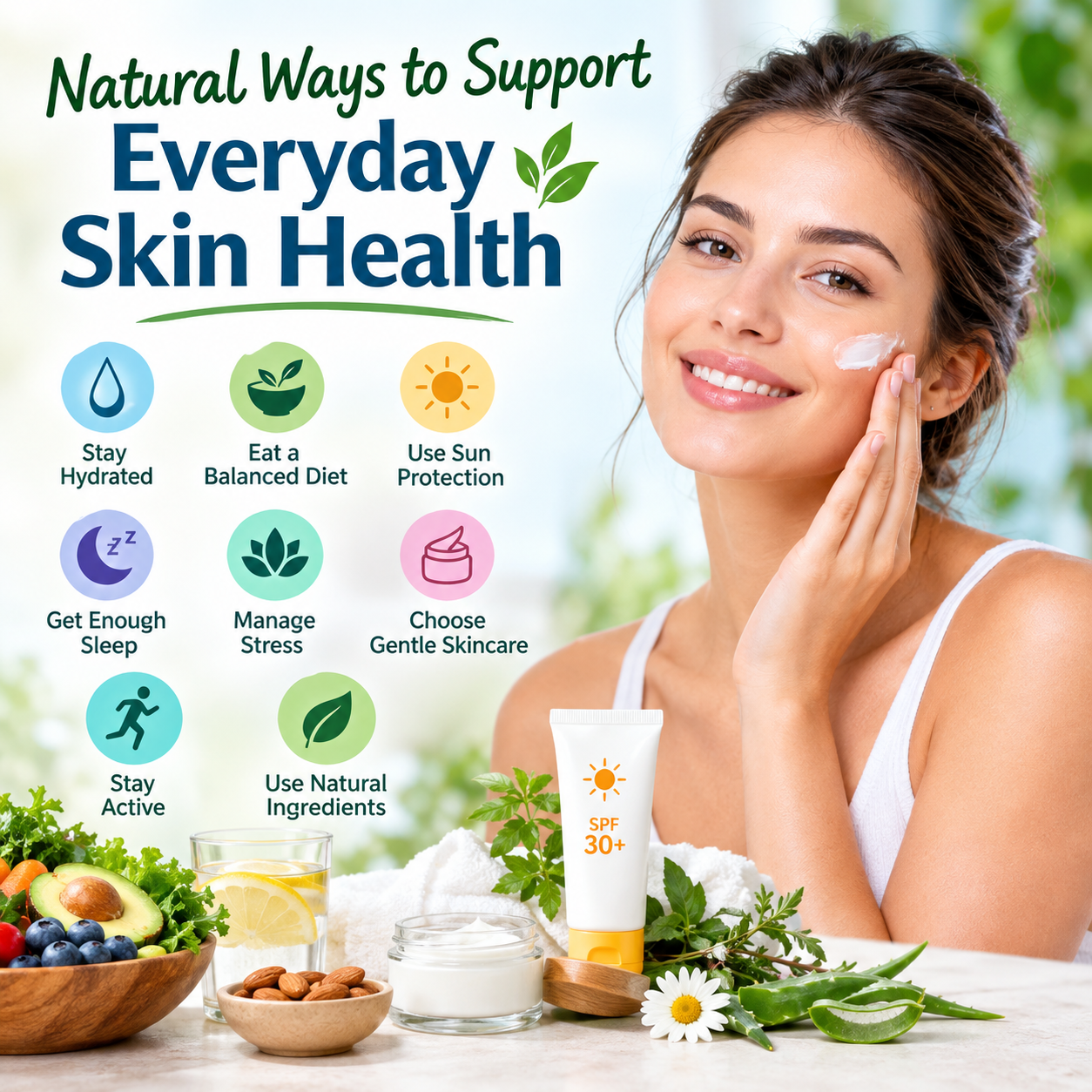
Healthy skin depends on more than appearance. Your skin forms a protective barrier, helps regulate body temperature and provides a first line of defence against environmental irritants. Everyday habits can support this barrier and help you maintain comfortable, healthy-looking skin.
You do not need an elaborate routine to care for your skin. Consistent habits such as gentle cleansing, regular moisturising, sun protection, balanced nutrition, adequate sleep and good hydration can make a meaningful difference. You should also pay attention to changes in your skin and seek professional advice when a persistent or unusual problem develops.
Natural approaches can complement sensible skin care, but they should not replace medical treatment for diagnosed skin conditions. Some natural ingredients can also cause irritation or allergic reactions, so always introduce new products carefully.
Why Everyday Skin Care Matters
Your skin faces environmental exposure every day. Sunlight, cold weather, dry air, pollution, sweat, frequent washing and friction can affect the skin barrier. Harsh soaps and excessive exfoliation may also remove protective oils and leave the skin feeling dry or irritated.
A simple routine can help reduce unnecessary stress on the skin.
Healthy everyday skin care usually focuses on three basic steps:
- Gentle cleansing
- Moisturising
- Protection from ultraviolet (UV) radiation
You can add other steps according to your skin type and individual needs. However, more products do not necessarily mean better results.
If you experience persistent redness, itching, scaling, swelling, pain, unexplained marks or changes in an existing skin lesion, speak with a GP, dermatologist or another qualified healthcare professional.
Cleanse the Skin Gently
Cleansing removes sweat, excess oil, dirt and substances that accumulate on the skin. However, aggressive cleansing can cause problems.
Hot water and harsh cleansers may strip natural oils from the skin. This can leave your skin feeling tight, dry or uncomfortable.
Choose a mild cleanser that suits your skin type. Use lukewarm rather than very hot water and avoid scrubbing aggressively. Pat your skin dry with a clean towel instead of rubbing it vigorously.
You may need different approaches for different areas of the body. Facial skin can be more sensitive than the skin on your arms or legs, while areas such as the armpits and feet may require attention because they accumulate sweat.
You should also avoid washing excessively simply because you want your skin to feel exceptionally clean. Over-cleansing can interfere with the skin barrier.
Moisturise Regularly
Moisturising helps reduce water loss from the outer layer of the skin. It can also make dry or rough skin feel softer and more comfortable.
Apply moisturiser after cleansing, particularly while the skin remains slightly damp. This habit can help retain moisture.
Look for a moisturiser that suits your skin. If you have oily or acne-prone skin, you may prefer a lighter formulation. If your skin becomes very dry, a thicker cream or ointment may provide greater comfort.
Fragrance-free products may work better if you have sensitive skin because fragrances can irritate some people.
Do not assume that a product labelled “natural” will automatically suit your skin. Plant extracts and essential oils can still trigger irritation or allergic reactions.
Protect Your Skin From the Sun
Sun protection plays an important role in everyday skin health. Ultraviolet radiation contributes to premature skin ageing and increases the risk of skin cancer.
Make sun protection part of your daily routine, particularly when you spend significant time outdoors.
You can protect your skin by:
- Using a broad-spectrum sunscreen with an appropriate SPF
- Reapplying sunscreen according to the product instructions
- Wearing protective clothing
- Using a wide-brimmed hat
- Seeking shade when sunlight is strongest
- Wearing sunglasses that provide UV protection
Do not rely on sunscreen alone. Clothing, shade and sensible outdoor habits provide additional protection.
Sun protection remains important even when the weather feels cool. UV exposure can occur throughout the year.
Eat a Balanced Diet
Your skin needs nutrients to maintain normal structure and function. A balanced diet provides vitamins, minerals, protein, healthy fats and other nutrients that support overall health.
Include a variety of foods rather than focusing on one “skin-friendly” ingredient.
Your meals can include:
- Colourful vegetables
- Fresh fruit
- Whole grains
- Beans and pulses
- Nuts and seeds
- Eggs
- Fish and other sources of protein
- Healthy sources of unsaturated fats
Foods containing vitamin C, vitamin E, zinc, selenium and other nutrients contribute to normal body functions that also affect skin health.
A balanced diet provides a better foundation than relying heavily on individual supplements. If you have a restricted diet or a diagnosed nutritional deficiency, discuss your nutritional needs with a qualified healthcare professional.
Drink Enough Fluids
Adequate fluid intake supports normal body function. Your hydration needs depend on factors such as your activity level, climate, diet and overall health.
Drinking water regularly can help you maintain normal hydration. However, drinking excessive amounts of water will not automatically transform dry skin.
If your skin remains dry despite adequate fluid intake, look at other factors. Low humidity, hot showers, harsh cleansers and certain medical conditions can contribute to dryness.
Moisturising and protecting the skin barrier remain important even when you drink plenty of water.
Choose Natural Ingredients Carefully
Many people prefer plant-based ingredients for everyday skin care. Some natural ingredients may feel soothing or moisturising, but natural does not always mean risk-free.
Essential oils, botanical extracts and homemade preparations can cause irritation or allergic contact dermatitis in some people.
Before applying a new product over a large area, consider testing a small amount according to appropriate product guidance. Stop using it if you develop significant irritation, burning, swelling or a rash.
Avoid applying homemade preparations to broken or infected skin unless a healthcare professional recommends them.
You should also avoid assuming that an ingredient will treat a specific skin condition simply because people commonly discuss it online. Evidence varies considerably between natural products.
Support Your Skin Barrier
The outer skin barrier helps limit water loss and protects against external irritants. Everyday habits can either support or disrupt this barrier.
To support your skin barrier:
- Use gentle cleansing products.
- Avoid very hot showers.
- Moisturise after bathing.
- Limit unnecessary exfoliation.
- Protect your skin from excessive sunlight.
- Avoid products that repeatedly cause irritation.
- Wear suitable clothing when exposed to cold, wind or intense sunlight.
If your skin frequently feels tight, burns after applying products or develops persistent flaking, simplify your routine. Using fewer products may help you identify potential irritants.
Avoid Excessive Exfoliation
Exfoliation can remove dead skin cells from the surface, but frequent or aggressive exfoliation can irritate the skin.
Physical scrubs can create friction, while chemical exfoliating products can cause irritation if you use them too frequently or combine several active ingredients.
You do not need to exfoliate simply because you notice normal skin texture. Your skin naturally sheds dead cells.
If you choose to exfoliate, follow the product instructions and introduce the product gradually. Stop if you develop persistent redness, burning or discomfort.
Get Enough Sleep
Sleep supports many normal processes throughout the body. Poor sleep can affect how you feel and may also influence the appearance of your skin.
Aim for a consistent sleep schedule and create habits that support good-quality sleep. Keep your sleeping environment comfortable, reduce unnecessary screen exposure before bedtime and avoid excessive caffeine late in the day.
Sleep alone cannot treat a skin disease, but healthy sleep habits can contribute to your overall wellbeing.
Manage Everyday Stress
Stress can affect the body in several ways, and some people notice changes in their skin during stressful periods. Certain skin conditions can also become more difficult to manage during periods of stress.
You can support general wellbeing with simple activities such as:
- Walking
- Gentle exercise
- Breathing exercises
- Spending time outdoors
- Relaxing hobbies
- Maintaining social connections
- Keeping a consistent daily routine
You do not need a complicated wellness programme. Choose activities that you can maintain regularly.
Be Careful With Skin Products
Using too many products can make it difficult to determine what helps or irritates your skin.
A simple routine may include a cleanser, moisturiser and sunscreen. You can add other products when you have a clear reason to use them.
Read product labels and follow the recommended directions. Avoid combining multiple strong active ingredients unless you know how they interact or a qualified professional has advised you to do so.
If you develop a new rash after starting a product, stop using it and monitor your symptoms. Seek medical advice if the reaction becomes severe or does not improve.
Keep Your Hands and Personal Items Clean
Your hands come into contact with many surfaces throughout the day. Regular hand washing helps reduce the spread of germs.
However, frequent hand washing can also dry the skin. Apply a suitable moisturiser after washing if your hands become dry.
Keep items that frequently touch your face reasonably clean. This includes pillowcases, towels, mobile phones and makeup tools.
Do not share personal items such as razors, towels or cosmetics when doing so could spread infection.
Exercise and Skin Health
Regular physical activity supports cardiovascular health, metabolic health and general wellbeing. Exercise also increases blood circulation and can make you sweat.
Sweat itself is not necessarily harmful to healthy skin, but leaving sweat on your skin for long periods can contribute to irritation in some situations.
After exercise, change out of damp clothing and cleanse your skin gently. Avoid scrubbing aggressively simply because you have been sweating.
Wear breathable clothing during physical activity and wash exercise clothing regularly.
Pay Attention to Skin Changes
Everyday skin care should also include awareness. Become familiar with your normal skin appearance so that you can notice meaningful changes.
Pay attention to changes such as:
- A new or changing mole
- A sore that does not heal
- Persistent itching
- Recurrent bleeding
- A rapidly changing skin lesion
- Persistent scaling
- Unexplained swelling
- A new area of pigmentation
- A rash that continues despite basic care
These signs do not automatically mean that you have a serious condition. However, persistent or unusual changes deserve professional assessment.
Do not attempt to diagnose a skin condition solely from photographs or online descriptions.
Natural Skin Care and Existing Conditions
People with conditions such as eczema, psoriasis, acne, rosacea or other inflammatory skin disorders may need a more specific routine.
A general natural skin-care routine may support comfort, but it cannot replace appropriate diagnosis and treatment.
For example, persistent inflammation may require prescription treatment, while a suspicious lesion may need examination by a dermatologist. Delaying assessment because you prefer natural approaches can allow some conditions to worsen.
If you already use prescription skin treatment, ask your healthcare professional or pharmacist before adding Herbal Care Products or botanical products.
For readers exploring complementary options, the phrase Herbal Supplements for Granuloma Annulare, Herbal Care Products can be used as an internal link to related information. Keep in mind that supplements should complement appropriate healthcare rather than replace diagnosis or prescribed treatment.
Support Skin Health Through Everyday Habits
You can support healthy skin without creating an unnecessarily complicated routine.
Start with the basics:
Morning
- Cleanse gently if needed.
- Apply moisturiser if your skin requires it.
- Use broad-spectrum sunscreen before going outdoors.
During the day
- Drink fluids regularly.
- Eat balanced meals.
- Protect exposed skin from excessive sunlight.
- Avoid repeatedly touching or scratching irritated areas.
Evening
- Remove makeup and sunscreen appropriately.
- Cleanse gently.
- Apply moisturiser.
- Give your skin time to recover overnight.
Adjust the routine according to your skin type, environment and individual needs.
When Should You Seek Medical Advice?
You should seek professional advice if you notice a persistent or unexplained skin problem.
Contact a healthcare professional if you develop a rash that does not improve, significant swelling, persistent pain, signs of infection, a changing mole or another unusual skin lesion.
Seek urgent medical care if you develop a severe allergic reaction with symptoms such as difficulty breathing, swelling of the lips or tongue, or widespread severe symptoms.
Early assessment can help identify the cause and guide appropriate treatment.
Final Thoughts
Natural ways to support everyday skin health usually begin with simple, consistent habits. Gentle cleansing, regular moisturising, sun protection, balanced nutrition, adequate hydration, sufficient sleep and sensible exercise can all contribute to general wellbeing and healthy-looking skin.
You should also respect the limits of natural skin care. A botanical ingredient may suit one person but irritate another, and a natural product cannot automatically treat a medical skin condition.
Focus on protecting the skin barrier, avoiding unnecessary irritation and paying attention to changes. When a problem persists or appears unusual, seek advice from a qualified healthcare professional rather than relying solely on home remedies.
A practical skin-care routine does not need to contain numerous products. Consistency, sensible protection and appropriate medical care provide a strong foundation for everyday skin health.