




Electric Powered Mini Excavator Applications Beyond Traditional Construction
Excavators are commonly associated with building foundations, roadworks, and large construction sites. However, compact excavation machinery has a much wider range of uses. Property maintenance teams, agricultural businesses, landscape designers, facility managers, and municipal departments all encounter tasks that require controlled digging or ground preparation. As battery-powered equipment becomes more available, these users may have another option to consider when selecting machinery for smaller projects.
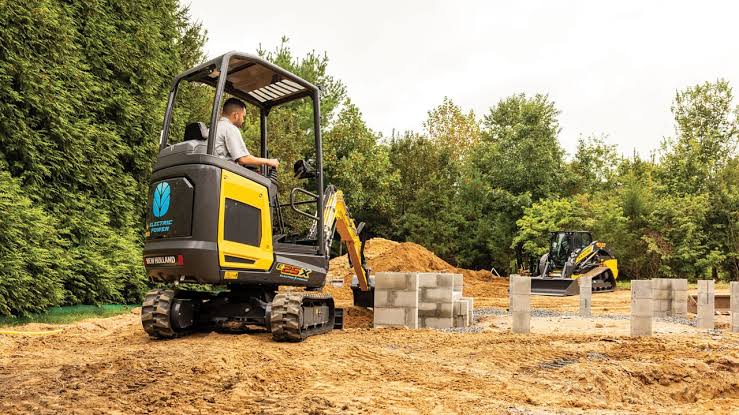
An electric powered mini excavator can be relevant to work outside conventional building construction when its dimensions, digging performance, and energy capacity suit the application. Its lack of direct exhaust emissions during operation may also be useful in certain occupied or emission-sensitive locations. The key is to identify the actual task and determine whether the machine can perform it within the manufacturer’s operating limits.
Property Maintenance and Estate Management
Large residential properties, commercial estates, and managed facilities often require recurring groundworks. Maintenance teams may need to repair drainage channels, replace damaged service lines, prepare planting areas, or remove sections of compacted soil.
A compact excavator can help complete these tasks without bringing a large machine onto the property. Its ability to work in smaller areas may reduce the need for extensive access preparation, although the route and ground-bearing capacity must still be checked.
Electric operation may be worth evaluating at sites where buildings remain occupied during maintenance. Eliminating direct machine exhaust emissions can simplify certain air-quality considerations, while potentially lower engine noise may be helpful near offices or residential areas. Other site activities can still produce noise and emissions, so the complete work environment should be assessed.
Agricultural and Rural Applications
Farms and rural properties contain a variety of small excavation tasks. These may include preparing irrigation routes, repairing drainage, installing water lines, shaping access paths, and digging around agricultural buildings.
A mini excavator can be useful where a tractor-mounted attachment or manual digging would be less convenient. Its compact structure may allow access to areas between buildings, storage facilities, and field boundaries, depending on ground conditions and machine dimensions.
Electric models require particular attention to charging access. Farms with suitable electrical infrastructure may be able to establish a dedicated charging location, but the equipment’s energy requirements should be checked before purchase. Long distances between work areas, extended operating periods, and limited access to power may affect practical suitability.
Landscaping and Garden Design
Landscape projects often involve precise ground shaping rather than large-scale excavation. Contractors may need to prepare planting beds, install water features, create small retaining structures, remove unwanted soil, or establish pathways.
A compact excavator can support these activities by moving soil and preparing the ground more efficiently than manual methods in many circumstances. Different bucket sizes and compatible attachments may help operators perform both excavation and finishing tasks.
Electric operation can be attractive for projects in established gardens, residential developments, and public spaces where nearby occupants may be affected by machinery noise. The operator must still protect trees, irrigation systems, existing paving, and buried services. Careful site marking and controlled digging remain essential.
Indoor Renovation and Facility Work
Some excavation and demolition-related tasks take place inside buildings. Warehouses, industrial facilities, agricultural buildings, and large commercial properties may require floor preparation, service access, or the removal of selected ground materials.
An electric excavator produces no exhaust emissions at the point of operation, which may make it worth considering for certain indoor applications. This characteristic does not make indoor use automatically safe. Before deployment, managers must assess ventilation, floor capacity, ceiling height, access width, fire safety, electrical hazards, and the movement of workers.
The machine must also be suitable for the floor surface and any ramps or transitions along the route. If the building has a strict floor-loading limit, the equipment’s operating weight and ground pressure should be reviewed by the responsible site personnel.
Municipal and Public-Space Maintenance
Local authorities and public-space contractors carry out recurring work in parks, pedestrian areas, roadside planting zones, and community facilities. Tasks may include repairing drainage, preparing tree pits, replacing service connections, and improving landscaped areas.
Compact machinery can be useful where access is restricted by paths, street furniture, or nearby buildings. Electric equipment may also be considered where local environmental requirements influence the selection of machinery.
Public projects require additional attention to pedestrian management. Work zones should be clearly separated, and the machine’s movement should be planned around public access, visibility, and the protection of nearby infrastructure. Contractors should follow applicable traffic-management and safety requirements.
Specialist Applications and Attachments
The versatility of a mini excavator often depends on the attachments it can support. Depending on the manufacturer’s approved configuration, applications may include augering, grading, trenching, and other specialised groundworks.
Before using an attachment, confirm its compatibility, hydraulic requirements, weight, and operating limitations. An attachment that is too demanding for the machine may reduce performance or create unnecessary strain on its systems.
The intended application should guide attachment selection. A landscaping contractor may prioritise grading and narrow digging buckets, while a maintenance team may require tools for service trenches or post-hole preparation.
Evaluating Whether a Non-Construction Application Makes Sense
Users outside traditional construction should assess the frequency of work, expected excavation depth, access conditions, available charging facilities, and local service support. A machine that is used regularly across several maintenance tasks may offer more value than one purchased for a single occasional job.
It is also important to compare ownership costs with alternatives such as hiring equipment, using manual labour, or adapting existing machinery. Transport, storage, operator training, insurance, and maintenance should all be included in the assessment.
A Broader Role for Compact Electric Excavation
Compact electric excavators are not limited to conventional building sites. Their potential applications extend to property care, farming, landscaping, facility maintenance, and municipal work. Each setting presents different demands, and no single machine will suit every task.
The most useful starting point is a clear understanding of the work to be completed. When machine capability, charging access, operator training, and site conditions align, electric excavation equipment can become a practical tool for a broader range of groundworks activities.