





Custom Latin Dance Shoes: Understanding Straps, Fastenings, and Adjustability
In Latin dancing, every step depends on a combination of balance, timing, and controlled foot movement. While heel height, sole material, and shoe shape often receive the most attention, straps and fastenings also play an important role in how dance shoes perform. The right fastening system helps keep the foot secure during turns, rapid transitions, and changes in direction without creating unnecessary pressure.
When exploring Custom Latin Dance Shoes, understanding the different strap styles and adjustment options can help you choose footwear that suits your foot shape and dancing needs. A well-designed fastening system should provide reliable support, feel comfortable throughout practice, and allow adjustments when needed. Knowing how each option works makes it easier to compare designs and select a pair that complements your technique.
Why Straps and Fastenings Matter in Latin Dance
Latin dance movements often involve quick footwork, sharp changes of direction, and controlled pivots. During these movements, the shoe needs to stay securely attached to the foot while allowing enough flexibility for natural articulation.
Straps help maintain this connection by limiting unwanted movement inside the shoe. When properly adjusted, they can reduce heel slippage and help prevent the foot from sliding forward during weight transfers.
However, tighter is not always better. Straps that press too firmly against the skin may cause discomfort, while loose fastenings can reduce stability. The ideal arrangement balances security with freedom of movement.
Common Strap Styles in Latin Dance Shoes
Different strap configurations offer different combinations of support, appearance, and adjustability. Understanding the main options can help you identify which design may suit your preferences.
1. Single Ankle Strap
An ankle strap wraps around the ankle and typically fastens with a buckle or another closure. This traditional design provides a straightforward way to secure the shoe.
Ankle straps are popular in many Latin dance shoe styles because they can help prevent the foot from shifting during movement. Their appearance can also complement both classic and contemporary designs.
When evaluating an ankle strap, consider its placement and width. It should hold the shoe comfortably without rubbing against the ankle bone or restricting movement.
2. T-Strap Design
A T-strap includes a central strap that extends from the front portion of the shoe toward an ankle strap, creating a T-shaped arrangement. This configuration distributes support across more of the foot than a simple ankle strap alone.
Some dancers appreciate the additional sense of security, especially when performing combinations that involve frequent changes in direction. The vertical strap may also help keep the shoe positioned more consistently.
Fit remains important, however. The central strap should sit comfortably over the foot without creating pressure around the instep.
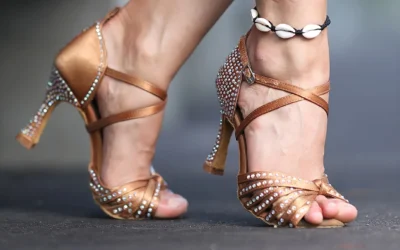
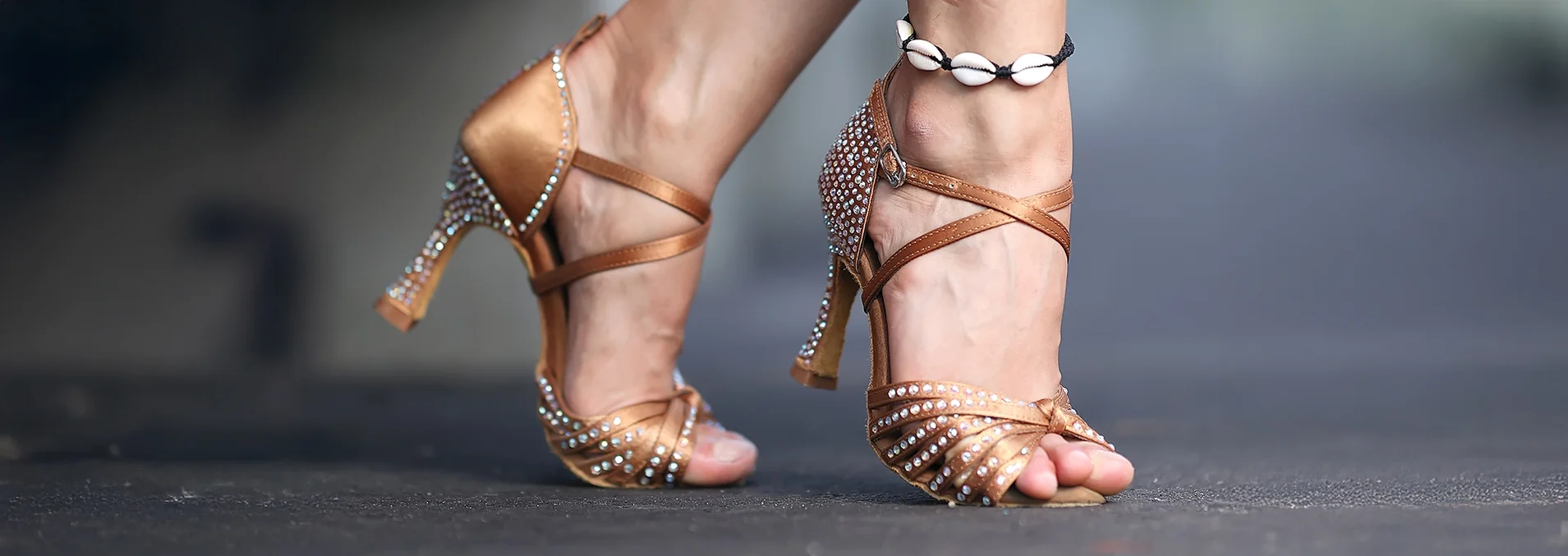
3. Crossed or Crisscross Straps
Crossed straps pass over the top of the foot and may connect around the ankle. Depending on the design, they can offer a secure fit while creating a distinctive visual style.
These arrangements may appeal to dancers who prefer a more adjustable or decorative upper. They can also provide several contact points to help hold the shoe in place.
Check that the straps lie flat against the skin and do not twist during movement. If the design includes multiple buckles or fastening points, make sure each one can be adjusted without making the process unnecessarily complicated.
4. Multiple-Strap Designs
Some Latin dance shoes use several narrow straps across the forefoot, instep, or ankle. These designs can distribute contact across different areas and create a detailed appearance.
The benefit depends on how the straps are positioned and constructed. Multiple straps do not automatically provide better support than a simpler design.
Look for a configuration that holds the foot securely without creating pressure points. Dancers with sensitive skin may also want to consider whether the edges or seams could cause friction during long sessions.
Understanding Different Fastening Systems
The fastening mechanism determines how easily you can secure and adjust your shoes. While buckles are common, other systems may be available depending on the shoe’s construction.
Buckle Fastenings
Traditional buckles allow the wearer to select from several adjustment positions. This makes them useful when a precise fit is important.
A buckle should close securely and remain fastened during movement. Check that its edges do not rub against the skin and that the strap length allows a comfortable adjustment.
Buckles can require a little more time to fasten than some alternatives, but many dancers appreciate their familiar and straightforward design.
Hook-and-Loop Closures
Hook-and-loop fastenings use two surfaces that attach when pressed together. Where offered, they can make shoes easier to put on and remove, particularly for dancers who prefer quick adjustments.
Their effectiveness depends on construction quality and how securely the closure remains attached during repeated movement. Keep the fastening surfaces clean and inspect them periodically for wear.
Always follow the manufacturer’s guidance on care and maintenance.
Elastic Components
Some dance shoe designs incorporate elastic sections to provide flexibility or help accommodate small changes in foot position. Elastic may appear in straps, panels, or other parts of the upper.
This flexibility can improve comfort, but elastic should not be expected to compensate for an incorrect shoe size. If the shoe is too loose or unstable, an elastic component alone may not provide the support you need.
Consider how the material feels when standing, pointing the foot, and performing basic steps.
How Adjustability Improves Fit
Feet can vary in width, instep height, and overall shape. Even dancers who wear the same shoe size may have different fitting requirements. Adjustable straps offer a way to accommodate some of these differences.
For example, a dancer with a higher instep may need more room across the top of the foot, while someone with a narrower ankle may prefer a fastening that can be tightened without creating excessive pressure elsewhere.
Adjustability can also help accommodate minor differences in comfort throughout a practice session. However, it should not be used to make an unsuitable shoe fit by force.
When comparing designs, consider the following factors:
- Adjustment range: Does the strap offer enough positions to create a secure, comfortable fit?
- Ease of use: Can you fasten and release the shoe without difficulty?
- Contact points: Do the straps sit comfortably against your foot and ankle?
- Stability: Does the shoe remain in place during basic turns and directional changes?
- Durability: Do the buckle, stitching, and fastening materials appear suitable for repeated use?
These details can make a meaningful difference to everyday comfort and convenience.
Choosing Straps for Different Dance Needs
The most suitable fastening style depends on your experience, technique, and preferred dance activities. There is no single strap arrangement that works best for every dancer.
For Beginners
Beginners may benefit from a design that is easy to fasten and provides a clear sense of security. A well-positioned ankle strap or T-strap can be a practical starting point, provided the overall shoe fits correctly.
New dancers should prioritize comfort and stability rather than selecting a design based only on appearance. A secure fit can make it easier to concentrate on learning steps and developing balance.
For Experienced Dancers
Experienced dancers may have more specific preferences based on their movement patterns and training routines. Some prefer minimal straps for a streamlined look, while others value additional contact points across the foot.
Consider how the fastening system behaves during your usual combinations. It should remain secure without interfering with pointed-foot positions, pivots, or transitions between steps.
If you regularly train for long periods, also consider whether the design remains comfortable after repeated use.
For Competitive Dancers
Competition footwear needs to combine a suitable fit with dependable construction and a design that complements the overall presentation. Straps should remain secure during a routine, and the fastening mechanism should not require repeated adjustment.
Before an event, test the shoes during practice under conditions similar to your usual performance. Avoid introducing a new strap style immediately before an important competition without allowing time to assess its fit and comfort.
Common Strap-Fitting Mistakes to Avoid
Even a well-made shoe can feel uncomfortable when its straps are adjusted incorrectly. A few simple checks can help prevent common problems.
Overtightening the straps: Pulling a strap too tightly may create pressure, restrict comfort, or leave marks on the skin. Fasten the shoe firmly enough to hold it in place without pinching.
Leaving straps too loose: Excess slack can allow the heel or forefoot to move inside the shoe. Recheck the adjustment if the shoe shifts during basic movements.
Ignoring strap placement: A strap that sits directly against a sensitive area may cause rubbing. Adjust the fit according to the shoe’s design, and seek a different configuration if discomfort persists.
Relying on straps to correct the wrong size: Fastenings can fine-tune fit, but they cannot reliably compensate for shoes that are too long, too short, or fundamentally unsuitable for your foot shape.
Neglecting wear and tear: Loose stitching, damaged buckles, and stretched elastic can affect security. Inspect these components regularly, particularly if you dance frequently.
How to Test Strap Comfort Before Dancing
Before using a new pair for a full practice session, spend a few minutes checking the fit. Fasten each strap according to the manufacturer’s instructions and stand naturally to assess how the shoe feels.
Walk through a few basic steps, shift your weight from one foot to the other, and try controlled turns on an appropriate dance surface. Pay attention to whether the heel stays in place and whether the straps remain comfortable as your feet move.
Next, check for pinching around the ankle, pressure across the instep, or friction where straps meet the skin. If the shoe feels unstable or painful, do not assume that continued use will resolve the problem.
A gradual introduction to new footwear can help you identify minor fit issues before using the shoes for an extended class or performance.
Caring for Straps and Fastenings
Regular maintenance helps preserve the function and appearance of dance shoe fastenings. After practice, check the straps for signs of stretching, fraying, loose stitching, or damage to the closure.
Store your shoes in a dry, well-ventilated place and follow the manufacturer’s cleaning recommendations. Avoid using harsh cleaning products unless they are specifically approved for the materials.
For buckle designs, check that the fastening remains secure and that the strap holes are not becoming excessively stretched. For elastic components, watch for loss of tension. If a strap or closure appears damaged, have it assessed or repaired before relying on it during demanding dance movements.
Final Thoughts
Straps and fastenings are more than decorative features of Latin dance shoes. They influence how securely the shoe sits on the foot, how easily the fit can be adjusted, and how comfortable the footwear feels throughout practice and performance.
Ankle straps, T-straps, crossed straps, and multiple-strap designs each offer different characteristics. Buckles, elastic components, and alternative closures also have distinct advantages depending on construction and personal preference.
When selecting dance shoes, look beyond appearance and consider adjustment range, strap placement, ease of use, and durability. Most importantly, remember that a fastening system works best when paired with the correct shoe size and shape.
By understanding these details and testing the fit before demanding use, you can make a more informed choice and find footwear that supports secure movement, comfortable practice, and confidence on the dance floor.