






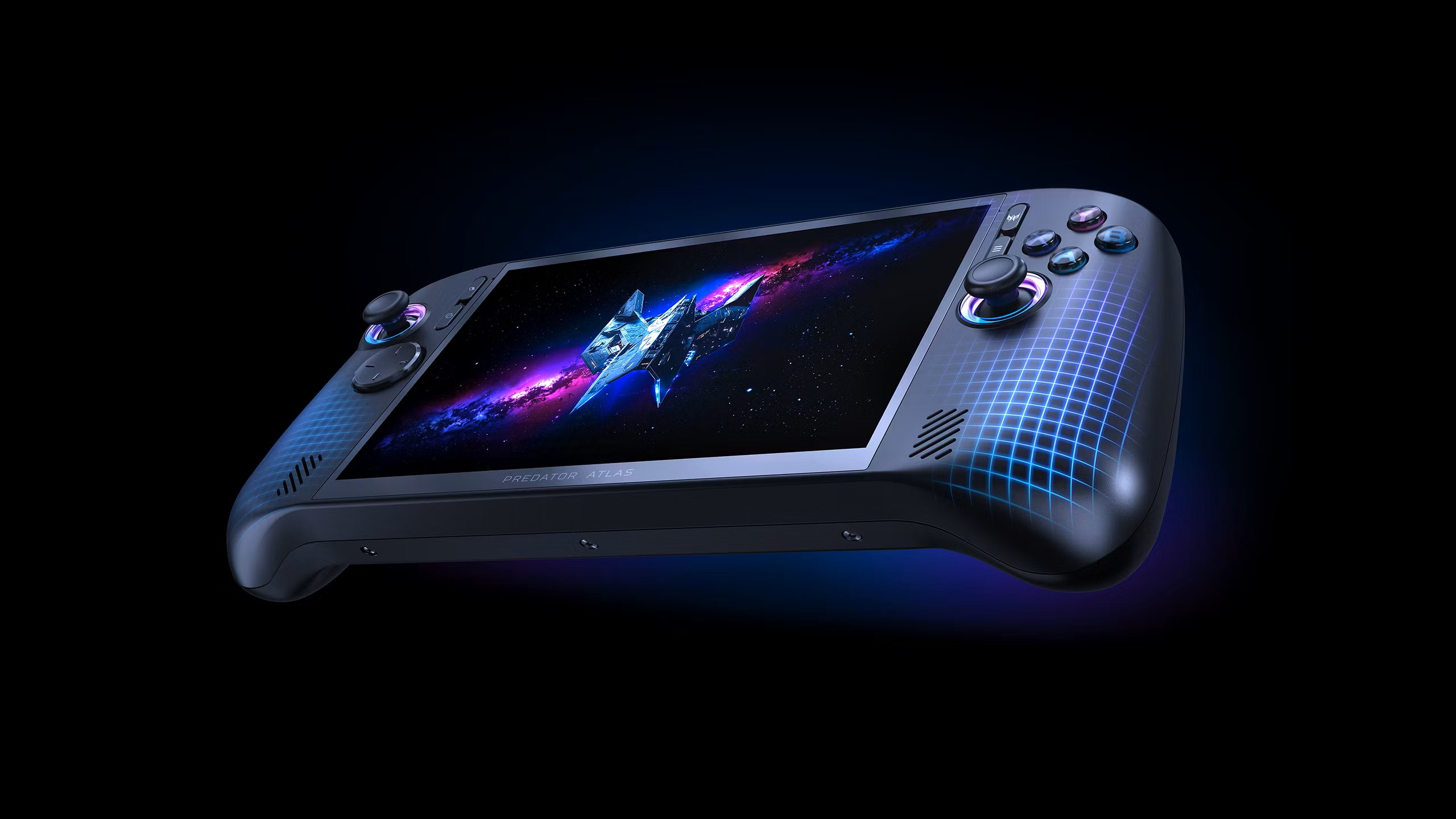
Best SoC for Gaming Consoles in 2026: The Chips That Actually Drive Your Games
Gaming consoles have changed dramatically over the years. Modern consoles are no longer built around a simple CPU and GPU combination. Instead, manufacturers use System-on-Chip (SoC) designs that combine major components into a single package. These chips handle processing, graphics, memory communication, AI-related workloads, and many other tasks needed for smooth gaming.
In 2026, SoC technology continues to play a major role in gaming performance. From powerful home consoles to portable gaming systems, the quality of the chip can influence frame rates, resolution, loading times, energy efficiency, and overall gaming experience.
In this guide, we explore the best SoC for gaming consoles in 2026, what makes these chips powerful, and how different architectures affect gaming performance.
What Is an SoC in a Gaming Console?
A System-on-Chip (SoC) brings several essential computing components together in one integrated chip. Modern gaming console SoCs can include the CPU, GPU, memory controller, media engine, and specialized hardware for AI tools and advanced gaming features.
This integrated design offers several benefits. It reduces hardware complexity, allows different processing units to communicate more efficiently, and can improve overall power efficiency. It can also help console manufacturers control production costs while delivering strong performance.
For gamers, the CPU and GPU remain two of the most important components. The CPU manages game logic, physics, artificial intelligence, and system processes, while the GPU handles graphics rendering, visual effects, and other demanding workloads. AI tools can further support features such as image enhancement, upscaling, and smarter gaming experiences.
Why the SoC Matters for Gaming Performance
The SoC is essentially the heart of a modern gaming console. Its capabilities affect almost every aspect of gaming performance.
A powerful SoC can support higher resolutions, faster frame rates, advanced lighting effects, better textures, and more detailed game worlds. It can also provide hardware acceleration for technologies such as ray tracing and AI-based image reconstruction.
Another important factor is efficiency. Console manufacturers need chips that deliver strong performance without producing excessive heat or consuming too much power.
This is particularly important for portable consoles, where battery life and thermal management are major concerns.
Best SoC for High-End Gaming Consoles
High-end gaming consoles require powerful SoCs capable of handling demanding games at high resolutions and frame rates. Custom AMD-based architectures remain particularly important in this segment because they combine Zen CPU technology with Radeon graphics technology.
Modern console SoCs are designed specifically for gaming workloads rather than general-purpose computing. This allows manufacturers to optimize the balance between CPU performance, GPU power, memory bandwidth, and power efficiency.
For demanding AAA games, the GPU portion of the SoC is especially important. A strong graphics architecture allows developers to create detailed environments while maintaining smooth performance.
AMD-Based Console SoCs
AMD has become one of the most important chip suppliers for modern gaming consoles. Its custom SoCs combine x86 CPU cores with Radeon-based graphics architectures.
The major advantage of this approach is flexibility. Console manufacturers can request custom configurations designed around their specific performance and power targets.
AMD’s graphics technology also supports modern features such as hardware-accelerated ray tracing and advanced upscaling technologies.
For gamers, this means better visual quality and improved performance in supported titles.
Apple Silicon and Portable Gaming
Apple’s M-series chips demonstrate how powerful integrated SoC designs can become. Although Apple’s chips are primarily designed for Macs, their architecture shows the advantages of combining CPU, GPU, memory technologies, and dedicated media hardware into a unified platform.
The high efficiency of Apple Silicon also makes this architecture interesting when discussing future portable gaming systems.
A console using a highly efficient SoC could deliver strong performance while maintaining lower power consumption. However, software optimization and game compatibility remain just as important as raw hardware specifications.
Qualcomm Snapdragon for Portable Consoles
Qualcomm’s Snapdragon platform is another important player in the portable gaming market. Snapdragon SoCs combine CPU and GPU technologies with connectivity and other components in a compact design.
This makes them suitable for handheld gaming devices where power efficiency matters.
Modern Snapdragon chips can provide impressive gaming performance while consuming significantly less power than many traditional desktop-oriented platforms. They also benefit from strong mobile gaming ecosystems and efficient thermal designs.
However, game compatibility can vary depending on the operating system and software architecture.
NVIDIA Technology and Gaming
NVIDIA remains one of the biggest names in gaming graphics. While NVIDIA is not currently the primary SoC provider for the leading traditional home consoles, its technologies influence the broader gaming hardware market.
NVIDIA’s graphics architectures are particularly well known for ray tracing and AI-powered image processing.
The Nintendo Switch family also demonstrated the potential of NVIDIA-based custom silicon in a portable gaming environment. This helped establish how a relatively efficient chip can deliver console gaming experiences in a handheld form factor.
What Makes a Great Gaming SoC?
Choosing the best SoC is not simply about looking at the highest clock speed. Several factors determine whether a chip is suitable for gaming.
CPU Performance
The CPU manages game logic, physics, artificial intelligence, background tasks, and other calculations. A strong multi-core CPU helps modern games manage complex worlds and large numbers of objects.
GPU Performance
The GPU is responsible for rendering graphics. More powerful graphics hardware can support higher resolutions, better textures, advanced lighting, and higher frame rates.
Memory Bandwidth
Memory bandwidth determines how quickly the processor can move data between memory and processing units. Games with high-resolution textures and complex environments can benefit significantly from higher bandwidth.
Ray Tracing Support
Ray tracing creates more realistic lighting, reflections, and shadows. Hardware acceleration makes this technology much more practical for real-time gaming.
Power Efficiency
Performance is important, but efficiency matters too. An efficient SoC can deliver strong gaming performance while producing less heat and consuming less electricity.
AI Acceleration
AI hardware is becoming increasingly useful in gaming. It can help with image upscaling, frame generation, voice processing, and other workloads.
SoC vs Traditional CPU and GPU Design
Traditional gaming PCs usually use separate CPU and GPU components. This approach allows users to upgrade individual components, but it can increase system complexity and power consumption.
A best SoC for gaming consoles combines many of these essential components into a single, optimized package for smooth and efficient gaming performance.
The biggest advantage is optimization. Console manufacturers know the exact hardware configuration developers will target. Developers can therefore optimize games specifically for that platform.
The disadvantage is upgradeability. Unlike a gaming PC, users generally cannot replace the SoC when a newer generation arrives.
How SoCs Improve Console Gaming in 2026
In 2026, gaming SoCs are becoming more sophisticated. Manufacturers are focusing on higher performance while improving efficiency.
One major trend is AI-assisted rendering. Instead of rendering every pixel at full resolution, modern systems can use specialized algorithms to reconstruct images at higher perceived quality.
Ray tracing is also becoming more common as hardware improves. Developers can use advanced lighting techniques without sacrificing as much performance as they would on older architectures.
Another important trend is better integration. CPU, GPU, memory systems, and specialized accelerators are increasingly designed to work together efficiently.
How to Choose the Best SoC for a Gaming Console
If you are evaluating a gaming console, do not judge its SoC based on one specification alone.
Look at the complete platform. Consider CPU architecture, GPU capabilities, memory bandwidth, ray tracing performance, AI acceleration, power efficiency, and software optimization.
The console’s game library is also important. A theoretically powerful SoC does not guarantee better gaming if developers cannot properly optimize their games for it.
For portable gaming, battery life and thermal performance should receive additional attention. For home consoles, sustained performance and graphical capabilities may be more important.
The Future of Gaming SoCs
The next generation of gaming SoCs will likely focus on AI, efficiency, advanced graphics, and improved integration.
AI-powered rendering could become a standard part of console graphics pipelines. Better ray tracing hardware may allow developers to use realistic lighting more extensively.
Chip manufacturing improvements should also allow manufacturers to place more processing power into smaller and more efficient designs.
For handheld consoles, energy efficiency will remain particularly important. Manufacturers will continue looking for ways to deliver console-quality gaming without requiring desktop-level power consumption.
Conclusion
The best SoC for gaming consoles in 2026 is not necessarily the chip with the highest specifications on paper. A great console SoC needs to balance CPU performance, GPU power, memory bandwidth, efficiency, AI capabilities, and software optimization.
AMD-based custom SoCs continue to be highly influential in high-performance consoles, while Qualcomm, NVIDIA, Apple, and other chip designers demonstrate different approaches to efficient gaming hardware.
As games become more detailed and demanding, SoCs will remain at the center of console innovation. Better graphics, AI-powered rendering, faster performance, and improved energy efficiency will shape the next generation of gaming experiences.