






Why Manufacturers Prefer Wrap Around Case Packer Systems for Secure Product Packaging
Product protection is a major concern for manufacturers that handle large production volumes and distribute goods across different markets. During storage, transportation, and handling, products may experience movement, pressure, vibration, and other conditions that can affect their quality. Choosing the right secondary packaging method is therefore essential for maintaining product safety and reducing packaging-related losses.
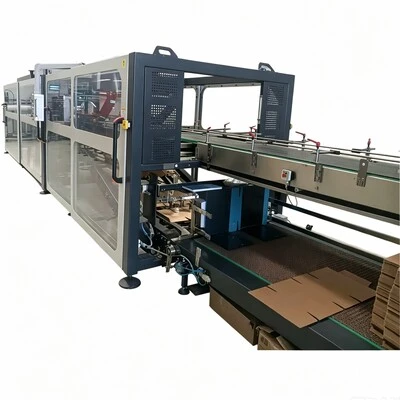
Automated carton packaging has become a practical solution for businesses seeking reliable and consistent results. A Wrap Around Case Packer forms corrugated cardboard cartons directly around grouped products, creating a secure outer package without requiring pre-assembled boxes. This packaging approach helps manufacturers improve carton consistency, simplify material handling, and support the demands of modern production environments.
Understanding Wrap-Around Case Packing Technology
A wrap-around case packing system is an automated machine that uses flat corrugated cardboard blanks to create shipping cases around groups of products. Instead of loading items into previously formed cartons, the machine positions a cardboard blank around the products and folds it into the required case shape.
The process generally includes product feeding, grouping, blank positioning, carton folding, and sealing. These operations are coordinated to produce finished cases that are suitable for warehouse storage and transportation.
This technology is commonly used in industries where products need to be packed in uniform quantities and protected during distribution.
Why Secure Product Packaging Matters
Packaging serves more than a storage function. It protects products against external handling conditions and helps maintain their arrangement throughout the supply chain.
Poorly designed cartons can result in several problems, including:
- Product movement inside shipping cases.
- Damaged packaging during transportation.
- Increased product returns and replacement costs.
- Difficulties with warehouse stacking and storage.
- Inconsistent presentation of finished goods.
A properly designed wrap-around carton helps hold grouped products in position while providing an external protective structure. The final level of protection depends on carton dimensions, corrugated board strength, sealing quality, and the characteristics of the products being packed.
Key Reasons Manufacturers Prefer Wrap-Around Case Packer Systems
1. Secure and Consistent Carton Formation
One important reason manufacturers choose automated wrap-around systems is their ability to produce uniform shipping cases.
The machine follows controlled folding sequences to create cartons with consistent dimensions and properly positioned panels. This reduces variations that may occur during manual carton assembly.
Uniform case formation also supports better stacking and more organized warehouse handling.
2. Improved Product Stability During Transportation
Products packed together in a properly sized carton are generally easier to handle and transport than loosely arranged items.
Wrap-around cartons are formed closely around grouped products, helping maintain their intended arrangement. When the carton design and internal product configuration are appropriate, this can reduce unnecessary movement during transportation.
Manufacturers can further improve product stability by selecting suitable board strength and carton dimensions based on product weight and distribution conditions.
3. Reduced Manual Handling
Traditional carton packaging often requires employees to assemble boxes, arrange products, load cartons, and seal packages manually.
Automated case packing systems combine these activities into a coordinated process. This reduces repetitive handling and allows employees to focus on equipment supervision, quality checks, and other production responsibilities.
Reducing unnecessary manual contact can also help maintain more consistent packaging operations.
4. Higher Production Efficiency
Manufacturers operating high-volume production lines need packaging equipment capable of maintaining a consistent output.
Automated wrap-around systems perform multiple packaging operations within a single production cycle. This can reduce delays associated with manual carton preparation and product loading.
When integrated properly with conveyors and other production machinery, these systems help maintain a smoother flow of finished products.
5. Better Use of Packaging Materials
Packaging material management directly influences manufacturing and warehouse expenses.
Wrap-around case packers use flat corrugated blanks that are folded around products during the packaging process. Since these blanks remain flat before use, they generally require less storage space than pre-assembled cartons.
Manufacturers can also select carton dimensions that closely match product arrangements, helping avoid unnecessary packaging material.
6. Improved Warehouse and Distribution Handling
Consistent carton dimensions make finished cases easier to organize, stack, and move through warehouse operations.
Uniform shipping cases can simplify pallet arrangement and help businesses use available storage space more effectively.
Securely formed cartons also support more predictable handling during loading, unloading, and distribution.
Industries That Benefit from Secure Wrap-Around Packaging
Wrap-around case packing systems are used across different manufacturing sectors where grouped products require reliable secondary packaging.
Food and Beverage Industry
Food and beverage manufacturers commonly use shipping cartons for bottles, cans, jars, and packaged products. Automated case packing helps maintain consistent product arrangements and supports large-scale distribution requirements.
For products with specific handling or hygiene requirements, machine configuration and packaging material selection must meet the relevant production standards.
Pharmaceutical Industry
Pharmaceutical manufacturers require organized secondary packaging to support product handling, storage, and distribution.
Automated case packing can help group individually packaged products into shipping cases while maintaining consistent carton formation. Equipment selection should account for applicable regulatory, traceability, and handling requirements.
Household and Cleaning Products
Detergent bottles, cleaning liquid containers, and other household products often require durable outer cartons for transportation.
Wrap-around packaging can help secure multiple containers within a single case, making finished goods easier to store and distribute.
Personal Care and Consumer Goods
Manufacturers of shampoo, lotion, cosmetics, and other consumer products can use automated carton packaging to maintain consistent shipping configurations.
The technology is particularly useful when products are manufactured in standardized sizes and require repeated case arrangements.
Factors That Influence Packaging Security
Choosing automated equipment is only one part of achieving reliable product protection. Several additional factors influence the strength and performance of finished shipping cases.
Corrugated Board Quality
The cardboard grade and thickness should match the weight and handling requirements of the products. Insufficient board strength may result in carton deformation or reduced stacking performance.
Carton Dimensions
Cases should be designed according to product dimensions and the intended packing arrangement. Excessive empty space may allow products to move during transportation.
Folding Accuracy
Incorrect folding can affect carton structure and create weak points. Proper machine adjustment helps ensure that panels and flaps are positioned correctly.
Sealing Performance
The selected sealing method must provide sufficient strength for the expected storage and transportation conditions. Adhesive application and carton flap alignment should be checked regularly.
Product Arrangement
Products should be grouped in a stable configuration that prevents unnecessary movement inside the carton. Fragile or unusually shaped items may require additional packaging considerations.
How to Choose the Right System for Your Manufacturing Facility
Selecting suitable equipment requires evaluating both current production requirements and future operational needs.
Manufacturers should consider the following points before investing in an automated case packing system:
- Production capacity: Determine the required cases per minute and expected daily output.
- Product specifications: Check product dimensions, weight, shape, and fragility.
- Carton design: Identify the required case sizes, corrugated board specifications, and packing patterns.
- Automation integration: Ensure compatibility with existing conveyors, filling equipment, and downstream packaging machinery.
- Factory layout: Confirm that sufficient space is available for installation, operation, and maintenance.
- Maintenance support: Evaluate spare parts availability, technical assistance, and routine servicing requirements.
- Production flexibility: Consider whether the machine can accommodate different carton sizes and product configurations.
Evaluating these factors helps manufacturers select equipment that supports reliable packaging without introducing unnecessary operational complexity.
Best Practices for Maintaining Packaging Quality
Even advanced automated machinery requires proper maintenance and regular quality monitoring.
Manufacturers can maintain consistent packaging performance by following several practical procedures:
- Inspect corrugated blanks to ensure consistent dimensions and material quality.
- Check product grouping and alignment before carton formation.
- Monitor folding mechanisms for wear, damage, or incorrect positioning.
- Verify adhesive application and sealing quality during production.
- Clean machine components according to recommended maintenance schedules.
- Train operators to recognize common packaging defects and equipment problems.
- Record downtime, carton defects, and production output to identify performance trends.
These measures help reduce packaging inconsistencies and support more dependable production operations.
Conclusion
Manufacturers prefer wrap-around case packing systems because they combine automated carton formation with consistent product grouping and sealing. Their ability to create uniform shipping cases, reduce manual handling, improve material management, and support organized distribution makes them a practical option for many high-volume manufacturing environments.
However, secure packaging depends on more than the machine itself. Proper carton design, suitable corrugated materials, accurate machine settings, and regular maintenance all contribute to reliable results. By considering these factors, manufacturers can develop packaging operations that protect products while supporting long-term production efficiency.