






What Businesses Should Know Before Ordering Disposable Food Containers Wholesale
Ordering food containers in large quantities can make purchasing more efficient for restaurants, catering companies, food manufacturers, retailers, and other food-service businesses. However, wholesale buying involves more than selecting a product and confirming a quantity.
Before purchasing Wholesale Disposable Food Containers, businesses should understand their packaging requirements, expected usage, storage capacity, product specifications, and supplier terms. LRpacking is one supplier in the disposable food packaging market, but the same considerations apply when evaluating wholesale suppliers generally.
Determine How Many Containers You Actually Need
The first step is to estimate realistic consumption. Review how many containers your business uses during a typical week or month and consider whether demand changes during holidays, promotions, or seasonal periods.
Ordering too little can lead to frequent reorders and potential shortages. Ordering substantially more than you can use may tie up cash and require additional storage space.
A purchasing estimate based on actual consumption provides a more practical foundation for wholesale ordering.
Match the Container to the Food
Different foods have different packaging requirements. A container suitable for dry snacks may not be appropriate for hot meals, liquid foods, oily dishes, or chilled products.
Consider factors such as:
- Food temperature
- Moisture and grease content
- Portion size
- Required shelf or storage conditions
- Transportation distance
- Expected handling
The container should provide appropriate protection without adding unnecessary material or cost.
Understand the Plastic Material
Not all disposable plastic containers have identical properties. Material selection can affect rigidity, transparency, temperature performance, and resistance to moisture or grease.
Ask the supplier which plastic is used and whether it is appropriate for the intended application. Buyers should also request relevant material or food-contact information when necessary.
Confirm the Dimensions
Product descriptions may provide nominal dimensions, but buyers should confirm the actual specifications before ordering large quantities.
Check length, width, height, diameter, capacity, and other relevant measurements. External dimensions are particularly important if containers need to fit specific bags, cartons, shelves, or automated equipment.
Do Not Overlook the Lid
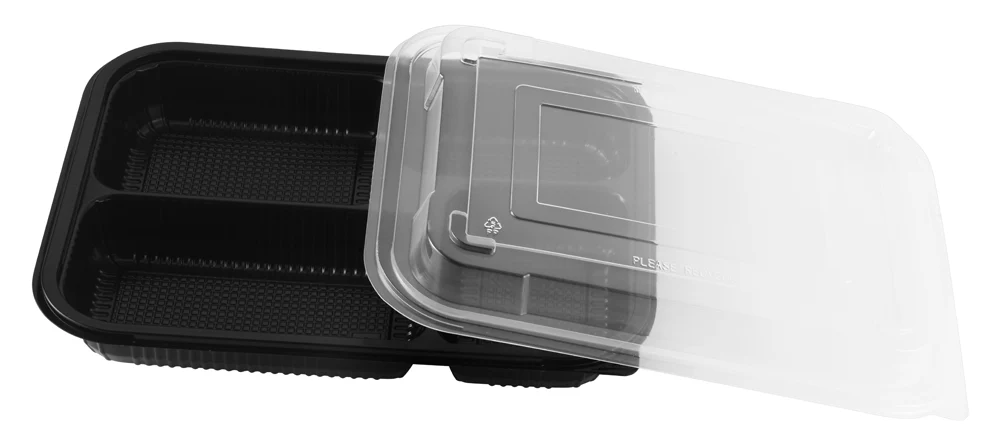
A lid is an essential component of many disposable food containers. A poor fit can result in spills, contamination, or difficulties during transportation.
Test the container and lid together before placing a large order. Pay attention to how easily the lid attaches, how securely it remains closed, and whether the seal is appropriate for the food being packaged.
Request Samples First
A sample gives businesses an opportunity to evaluate packaging before committing to wholesale quantities.
Use samples under realistic conditions. Fill them with the food products they will actually contain, stack them as they would be stored, and test them during typical transportation or handling.
This can reveal practical problems that may not be apparent from photographs or specifications.
Check Minimum Order Quantities
Wholesale pricing often comes with minimum order requirements. These quantities can vary by container type, size, material, customization, and production method.
Make sure the minimum quantity fits your consumption rate and warehouse capacity. A lower unit price is not necessarily useful if the required quantity creates excessive inventory.
Understand the Pricing Structure
Before confirming an order, ask for a detailed quotation. The advertised or quoted unit price may not include every cost associated with purchasing the products.
Depending on the supplier, consider:
- Product cost
- Customization or printing charges
- Mold or tooling expenses
- Packaging costs
- Freight and shipping
- Applicable taxes or fees
Comparing the complete cost makes it easier to assess different wholesale offers.
Review Quality-Control Procedures
Consistency matters when buying containers in bulk. Variations between batches can affect filling, stacking, sealing, and transportation.
Ask how the supplier monitors product quality. Relevant checks may include dimensions, weight, wall thickness, appearance, strength, and lid compatibility.
It is also worth asking how defective products are identified and handled before shipment.
Verify Food-Contact Information
Depending on the market where the containers will be used, specific food-contact requirements may apply.
Businesses should ask for relevant documentation and verify that it corresponds to the material and products being purchased. Requirements can differ by jurisdiction and intended application, so buyers should identify the standards relevant to their market.
Consider Storage Requirements
Wholesale orders require adequate storage space. Disposable containers can occupy considerable warehouse volume even though they are lightweight.
Before ordering, estimate how many cartons or pallets the shipment will require. Consider whether containers can be stacked safely and whether the storage area protects them from damage, contamination, excessive heat, or moisture.
Ask About Lead Times
A supplier’s production schedule can affect your ability to maintain adequate inventory. Standard products may have different lead times from customized products.
Confirm the expected production and shipping timeframe before placing an order. If your business has regular packaging requirements, ask whether advance ordering or demand forecasting can help maintain supply.
Consider Customization Carefully
Custom packaging can support specific functional or presentation requirements, but it can also introduce additional costs and longer production times.
If you need custom dimensions, colors, printing, or other features, clarify the design process and approval requirements. Confirm the minimum quantity, tooling costs, sample process, and production schedule before proceeding.
Evaluate Shipping and Product Protection
Large quantities of containers need to be packed appropriately for transportation. Ask how products are arranged inside cartons and whether additional protection is used for long-distance shipping.
You should also understand the shipping terms and determine who is responsible for freight arrangements, documentation, and other logistics requirements.
Plan for Repeat Orders
Wholesale purchasing works best when it is integrated into a broader inventory plan. If your business uses containers consistently, estimate future requirements rather than treating every order as an isolated purchase.
Sharing realistic forecasts with a supplier can make production planning easier. It may also help businesses avoid emergency orders caused by unexpectedly low inventory.
Consider Sustainability and Disposal
Environmental considerations should also be part of the purchasing process. Depending on local infrastructure and business requirements, buyers may want to consider recyclable materials, reduced material usage, or packaging designs that minimize unnecessary waste.
Do not assume that a container is recyclable simply because it is made from plastic. Check the material type and consider how that material is handled by recycling systems in the target market.
Create a Pre-Order Checklist
Before approving a wholesale purchase, make sure the following details are clear:
- Product material and specifications
- Container capacity and dimensions
- Lid type and compatibility
- Intended food and temperature conditions
- Sample approval
- Minimum order quantity
- Unit and total costs
- Production lead time
- Food-contact documentation
- Customization requirements
- Shipping and packaging arrangements
- Quality-issue procedures
Having these details confirmed in advance can reduce misunderstandings and make the purchasing process more predictable.
Conclusion
Wholesale food container purchasing can provide practical benefits, but businesses need to evaluate the entire supply process before placing a large order. Product suitability, material, dimensions, lid performance, quality control, pricing, storage, delivery, and compliance all deserve attention.
A careful pre-order review helps businesses choose packaging that fits their operational needs while reducing the risk of excess inventory, unexpected costs, or supply interruptions. The most useful wholesale arrangement is one that balances product performance with practical purchasing and inventory requirements.