



How to Make Textile Packaging Boxes Suitable for Different Types of Fabric Products
A silk scarf and a wool blanket have almost nothing in common when it comes to packaging. One wrinkles if you look at it wrong, and the other takes up three times the space. Yet plenty of textile brands order a single box size, hope for the best, and end up with crushed bedding, creased scarves, or boxes so loose the product slides around in transit.
Good textile packaging starts with the fabric itself. Here’s how to match the box to what’s going inside.
Start With the Fabric Type
Fabrics fall into a few rough groups, and each one asks something different of its box.
Delicate fabrics like silk, satin, and lace need protection from creasing, snagging, and moisture. A rigid box with a smooth interior and tissue lining does the job well.
Bulky fabrics like blankets, comforters, and heavy knits need depth and room to breathe. Cramming them into a tight box leaves permanent fold lines and flattens the texture customers pay for.
Lightweight everyday fabrics like cotton shirts, linen napkins, and handkerchiefs are forgiving, so you can use a shallower box and keep shipping costs down.
Formal and structured pieces like ties, pocket squares, and embroidered linens are often gifts, so presentation matters as much as protection.
If your catalog covers more than one of these groups, plan for a few box sizes and depths rather than one that tries to fit everything.
Get the Size and Depth Right
Measure the product folded the way it will be packed, not laid flat. A folded bath towel might measure 12 by 12 inches but stand 4 inches tall, and that height decides whether the lid closes cleanly or bulges.
Leave a little room for tissue paper, a thank-you card, or an insert, but not so much that the product shifts. A good rule is to measure the largest item in each product line and size the box to that. Smaller items can be handled with inserts or extra tissue, while a box that’s too small for the biggest item can’t be fixed.
Choose a Box Structure That Fits the Product
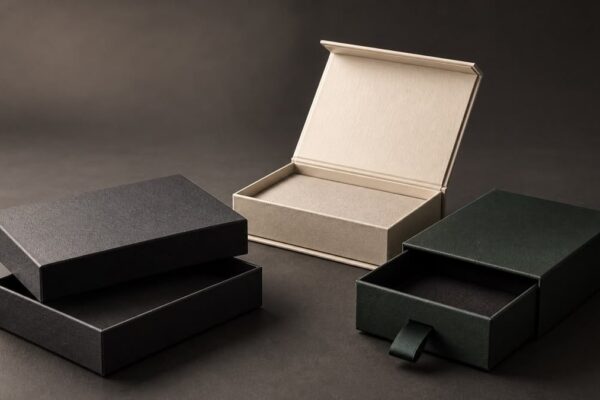
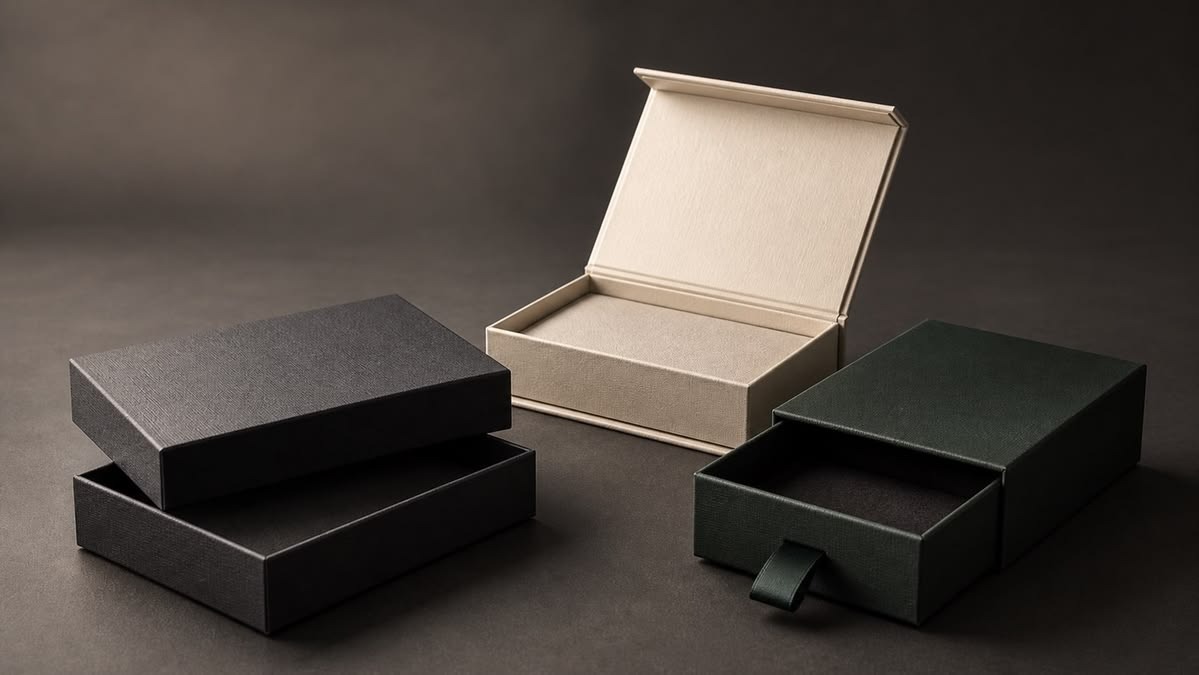
Rigid boxes hold their shape better than folding cartons, which is why they’re popular for textiles that need to look premium and survive storage. A few common styles work well:
- Two-piece lid and base boxes suit most fabric products, from bedding sets to scarves.
- Magnetic closure boxes work for gift items and higher-end collections where the opening experience matters.
- Drawer-style boxes suit smaller items like ties, handkerchiefs, and accessories.
- Collapsible rigid boxes ship flat and assemble quickly, which helps when storage space is tight.
A rigid box also doubles as a keepsake. When a customer reuses it, your brand stays in their home long after the purchase.
Protect the Fabric Inside
Where the product sits in the box counts as much as the box itself. Moisture, dust, and friction are the three things that damage fabric in storage and shipping.
- Line the box with acid-free tissue paper for delicate or light-colored fabrics, since regular paper can cause yellowing over time.
- Use a moisture-resistant coating or liner if the products will be stored in humid conditions.
- Add custom inserts or dividers for sets, such as sheets with matching pillowcases, so nothing shifts or bunches up.
- Choose smooth interior finishes for silks and satins, which snag easily on rough surfaces.
Custom Printing and Branding
Fabric is a tactile product, so the first impression the box gives sets expectations before the customer touches anything. A textile storage box with custom printing helps your brand stand out on shelf and look consistent from one product line to the next.
Some things worth deciding early:
- Logo placement: The lid center, side panels, and inside of the lid all work, depending on how the box will be seen.
- Finish: Matte lamination feels soft and suits natural fabrics like cotton and linen. Gloss looks bolder but can feel less refined. Foil stamping and embossing add a premium touch for gift collections.
- Color: Keep the palette close to your brand and the product. Earthy tones suit organic fabrics, while deep jewel tones suit silks and formalwear.
- Interior printing: A printed lid interior or patterned tissue paper adds a small surprise when the box is opened.
Premier Rigid Boxes is one company that produces custom rigid packaging for apparel and textile brands, with options for sizing, finishes, and printed branding. Getting quotes from a few suppliers like it will give you a clearer idea of pricing for your own needs.
Think About Storage and Reuse
Many textile products, such as bedding, towels, and seasonal clothing, end up stored in the box for months. That means the box needs to stack well, resist crushing, and keep dust out. A sturdy rigid construction handles this better than thin cardboard, and a lid that fits snugly keeps the contents clean.
If customers will keep the box, consider a design that looks good on a closet shelf. A clean print and a durable finish turn the packaging into part of the product.
Test Before You Order in Bulk
Before you approve a full order, request a sample and pack it with the real product. Close the lid, stack a few boxes, and leave them for several days. Check for creases, shifting, and any color transfer from tissue or inks. It takes little time, and it can save you from a costly reorder.
Quick Reference Table
| Fabric Type | Examples | Recommended Box Style | Key Packaging Needs |
| Delicate fabrics | Silk scarves, satin, lace | Two-piece rigid box with tissue lining | Smooth interior, acid-free tissue, crease protection |
| Bulky fabrics | Blankets, comforters, heavy knits | Deep rigid box or collapsible rigid box | Extra depth, no tight compression, sturdy walls |
| Lightweight fabrics | Cotton shirts, linen napkins, handkerchiefs | Shallow lid and base box or drawer box | Light weight, lower shipping cost, simple branding |
| Gift and formal pieces | Ties, pocket squares, embroidered linens | Magnetic closure or drawer-style box | Premium finish, foil or embossing, presentation |
| Bedding sets | Sheets with pillowcases | Two-piece rigid box with dividers | Inserts to keep pieces separated and neat |
| Stored seasonal items | Winter clothing, towels | Rigid box with snug lid | Stacking strength, dust and moisture protection |
Final Thoughts
There’s no single box that works for every fabric. Start with the product, measure it as it will be packed, and choose a structure that protects it while showing off your brand. Add custom printing that complements the fabric’s look, and test samples before you commit to a large order. Do that, and your packaging will protect the product and leave a better impression with every customer who opens it.