






Best Practices for Extrusion Die Cleaning to Maintain Production Quality and Efficiency
Extrusion is widely used in manufacturing processes to produce products with consistent shapes, dimensions, and surface finishes. Whether processing plastics, rubber, or other extrudable materials, the condition of the extrusion die plays an important role in determining final product quality. Over time, material residues, carbonized deposits, additives, and other contaminants can accumulate inside die channels and openings. These deposits may affect material flow, create surface defects, and increase production interruptions. Proper Extrusion Die Cleaning helps remove unwanted buildup, maintain consistent processing conditions, and support reliable manufacturing performance.
Why Is Extrusion Die Cleaning Important?
An extrusion die directs molten or softened material through specially designed openings to create a required product profile. Its internal passages and surfaces must remain clean to maintain consistent flow and dimensional accuracy.
During continuous production, small amounts of material may remain inside the die. When exposed to heat for extended periods, these residues can degrade, harden, or form deposits. Contaminants may also accumulate around die lips, channels, and other critical areas.
Regular cleaning helps address these issues before they affect production quality. It also supports more predictable maintenance schedules and reduces the likelihood of unexpected equipment downtime.
Common Signs That an Extrusion Die Needs Cleaning
Recognizing early signs of contamination helps manufacturers determine when maintenance is necessary.
1. Surface Defects in Extruded Products
Streaks, rough patches, discoloration, and other surface imperfections may indicate material buildup or contamination inside the die. Although process settings and raw material quality can also cause defects, die inspection is an important troubleshooting step.
2. Uneven Material Flow
Deposits inside die channels can restrict the movement of material. This may create uneven flow, inconsistent product dimensions, or variations in wall thickness.
3. Increased Production Pressure
A partially blocked die may increase resistance to material flow. Operators may notice changes in extrusion pressure or other process indicators, which can suggest that the die requires inspection.
4. Frequent Product Rejection
When contamination affects product appearance or dimensions, manufacturers may experience increased scrap and rework. Investigating die condition can help identify one possible source of recurring quality problems.
5. Material Discoloration or Burn Marks
Degraded polymer residues can produce dark particles or discoloration in newly extruded products. These defects may become more noticeable when deposits remain inside heated die passages.
Best Practices for Effective Extrusion Die Cleaning
A consistent cleaning procedure helps remove deposits while protecting the die’s precision surfaces.
1. Follow a Planned Cleaning Schedule
Cleaning frequency should be based on production volume, material type, operating temperature, and the tendency of the processed material to leave deposits. Some materials require more frequent maintenance than others.
Manufacturers should establish cleaning intervals using production records, inspection findings, and equipment recommendations. A planned approach is generally more reliable than waiting until product defects become severe.
2. Select a Suitable Cleaning Method
Different cleaning methods are appropriate for different die materials, geometries, and contamination types. The selected process should remove deposits without damaging critical surfaces or changing die dimensions.
Common approaches include:
- Manual cleaning: Suitable for accessible areas and light deposits when performed with approved tools.
- Chemical cleaning: Uses compatible cleaning agents to dissolve or loosen certain residues.
- Thermal cleaning: Uses controlled heating to remove organic material, where the die material and design can tolerate the process.
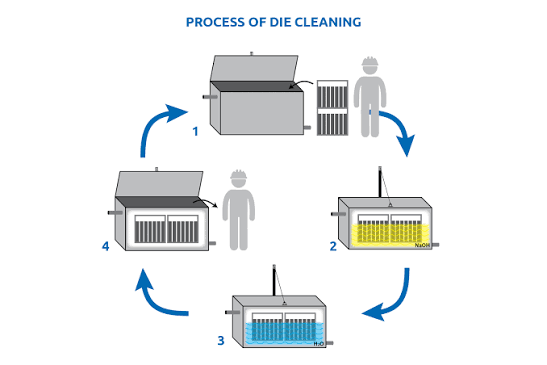
- Specialized cleaning equipment: May use controlled mechanical, thermal, or chemical processes for more complex die geometries.
The method should always be selected according to the die manufacturer’s instructions and the nature of the contamination.
3. Disassemble the Die Carefully
When deeper cleaning is required, the die may need to be disassembled to access internal passages and components. Before disassembly, operators should follow the machine shutdown and isolation procedures.
Components should be labeled and organized to prevent incorrect reassembly. Precision inserts, bolts, and alignment features should be handled carefully to avoid scratches, deformation, or damage.
4. Remove Residues Without Damaging Surfaces
Cleaning tools must be compatible with the die material and surface finish. Excessive force, abrasive materials, or unsuitable metal tools can scratch precision surfaces and affect product quality.
Deposits should be removed using approved methods and appropriate cleaning agents. Special attention should be given to narrow passages, corners, and die lips where residues can be difficult to detect.
5. Clean Internal Channels and Openings
Internal channels directly influence material distribution and flow. Any remaining deposits can create restrictions or uneven flow patterns.
Where possible, use suitable inspection tools to check internal passages after cleaning. Cleaning procedures should address both visible surfaces and less accessible areas that may retain degraded material.
6. Inspect the Die After Cleaning
Cleaning provides an opportunity to examine the die for wear, corrosion, scratches, and other signs of damage. Critical dimensions and surfaces should be checked when necessary.
If defects are found, the die may require polishing, repair, or replacement of specific components before returning to production.
7. Dry and Reassemble Correctly
After wet or chemical cleaning, components should be dried thoroughly using an approved method. Remaining moisture or cleaning-agent residue can cause contamination or operational problems during production.
Reassembly should follow the manufacturer’s specifications, including correct component orientation, fastening procedures, and alignment requirements.
Choosing the Right Extrusion Die Cleaning Method
The best cleaning method depends on several technical considerations.
Die Material and Construction
Extrusion dies are manufactured from different tool steels and other materials selected for strength, wear resistance, and operating conditions. Cleaning processes must be compatible with the die’s material and any protective coatings.
Type of Material Residue
Different polymers and additives leave different types of deposits. Some residues can be removed with mild cleaning agents, while others may require controlled thermal or specialized treatment.
Die Geometry
Complex dies with narrow passages, multiple channels, or intricate profiles can be difficult to clean manually. Manufacturers should consider whether specialized equipment is needed to reach internal areas effectively.
Required Surface Finish
Precision die surfaces influence the appearance and dimensional quality of extruded products. Cleaning should preserve the original surface finish and avoid unnecessary abrasion.
Production Requirements
Cleaning frequency and method should also reflect production schedules. Facilities with continuous production may benefit from planned maintenance windows and spare die components to reduce interruptions.
Safety Precautions During Extrusion Die Cleaning
Cleaning extrusion dies can involve hot surfaces, chemicals, sharp components, and heavy equipment. Appropriate safety procedures are essential.
- Isolate the equipment: Shut down the extrusion machine and follow lockout/tagout procedures before maintenance.
- Allow safe cooling: Confirm that the die has reached a safe handling temperature unless an approved process specifically requires controlled heating.
- Use suitable protective equipment: Wear appropriate gloves, eye protection, protective clothing, and respiratory protection when required by the cleaning method.
- Follow chemical handling instructions: Review safety data sheets and use cleaning agents according to their specified procedures.
- Provide adequate ventilation: Ensure that the cleaning area has appropriate ventilation, particularly when solvents or heated residues may release vapors.
- Use approved lifting equipment: Follow safe handling procedures for heavy die assemblies and components.
- Train maintenance personnel: Ensure workers understand the equipment, cleaning process, and relevant emergency procedures.
Thermal and chemical cleaning should only be carried out using equipment and procedures designed for those applications.
How Proper Die Cleaning Improves Production Efficiency
A clean extrusion die supports stable manufacturing conditions in several ways.
More Consistent Product Quality
Removing deposits helps maintain the intended material flow through the die. This can reduce certain surface defects, dimensional variations, and contamination-related product issues.
Reduced Unplanned Downtime
Scheduled cleaning helps identify buildup before it causes significant flow restrictions or production problems. This allows maintenance to be planned around production requirements.
Lower Material Waste
When contamination affects product quality, manufacturers may need to discard or reprocess affected material. Maintaining clean dies can help reduce this type of waste.
Improved Equipment Reliability
Routine cleaning and inspection help identify wear, damage, and other developing problems. Addressing these issues early can support more reliable die performance.
Better Maintenance Planning
A documented cleaning program gives production and maintenance teams a clearer understanding of equipment condition. Records can help determine suitable cleaning intervals and identify recurring contamination patterns.
Common Mistakes to Avoid
Even when cleaning is performed regularly, unsuitable practices can damage equipment or leave deposits behind.
One common mistake is using abrasive tools that scratch precision surfaces. Another is selecting chemical agents without checking their compatibility with the die material, coatings, and residues.
Manufacturers should also avoid overheating dies during thermal cleaning or using uncontrolled heating methods. Inadequate drying after wet cleaning can leave moisture or chemical residues behind. Finally, failing to inspect the die after cleaning may allow existing wear or damage to go unnoticed.
Following documented procedures and manufacturer recommendations helps prevent these problems.
Conclusion
Extrusion die cleaning is an important part of maintaining product quality, process consistency, and manufacturing efficiency. Material buildup inside die channels and openings can affect flow, create surface defects, and contribute to production interruptions.
By establishing suitable cleaning schedules, selecting compatible cleaning methods, protecting precision surfaces, and inspecting components after maintenance, manufacturers can keep extrusion dies in reliable operating condition. Combining proper cleaning with routine safety checks and maintenance records supports more consistent production and helps extend the useful service life of extrusion tooling.