


Plywood Core Material Comparison: Poplar, Eucalyptus, Birch, and Combi Core – Which Option Is Right for Your Project?
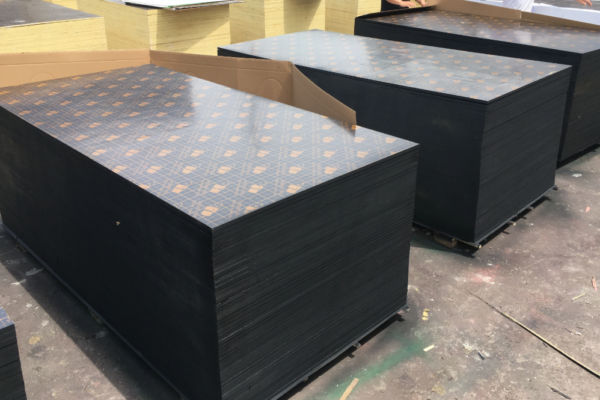
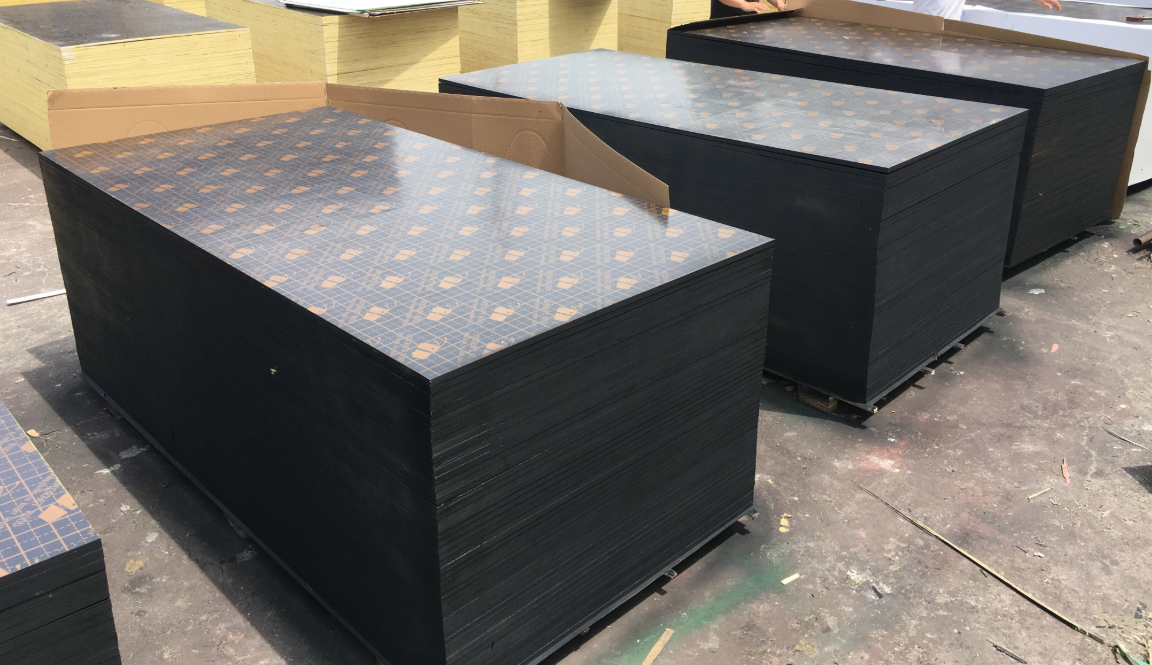
Two panels sit side by side on the warehouse floor. They look identical – same brown phenolic film, same film faced plywood 18mm / 1220x2440mm dimensions, same thickness. Yet one costs 30% more than the other.
What accounts for the difference? The core material.
For B2B procurement managers, general contractors, and construction firms sourcing wholesale film faced plywood, understanding core material differences is essential. The core makes up more than 90% of the panel’s structural volume. While the phenolic film protects the surface, the core bears the full pressure of concrete pouring, bending stress, and on-site wear.
This guide compares four common core materials – poplar, eucalyptus, birch, and combi core – to help you choose the right concrete formwork plywood for your specific project requirements.
Why the Core Material Matters More Than You Think
Many buyers focus only on film weight and glue type when evaluating wholesale film faced plywood. However, the core material determines:
Structural strength – The ability to withstand concrete lateral pressure without deformation
Reuse cycles – How many pours the panel can deliver before failure
Weight and handling – Heavier panels require more labor and shipping cost
Cost efficiency – Initial price vs. long-term cost per use
A panel with premium film and WBP glue but a poor-quality core will fail prematurely. The core is the hidden determinant of panel performance, and understanding its characteristics is key to making a smart procurement decision.
Four Main Core Materials – A Comprehensive Comparison
1. Poplar Core – The Budget-Friendly Option
Poplar is one of the most widely used core materials in the Chinese wholesale film faced plywood industry due to its low cost and light weight.
Key Characteristics:
Density: 450–520 kg/m³ (lightweight)
Strength: Moderate; suitable for light-duty applications
Reuse Cycles: 5–8 times with proper handling
Price: Low – the most economical option
Best Applications:
Small residential projects
One-time or limited-use formwork
Budget-sensitive projects
Low-rise buildings where lateral pressure is minimal
Advantages: Affordable, easy to handle, easy to cut on site, low shipping cost due to lighter weight.
Disadvantages: Lower density limits load-bearing capacity, fewer reuse cycles, poor resistance to heavy loads and high lateral pressure.
Sourcing Note: Poplar core panels are typically produced with single hot-press or double hot-press. Single-press poplar yields only 3–5 reuses, while double-press poplar can achieve 6–10 reuses.
2. Eucalyptus Core – The Balanced Performer
Eucalyptus has become one of the most popular choices among international buyers because it offers an excellent balance between performance and cost.
Key Characteristics:
Density: 550–650 kg/m³ (medium-heavy)
Strength: High – excellent load-bearing capacity
Reuse Cycles: 10–15+ times
Price: Medium – good value for money
Best Applications:
Commercial buildings
High-rise construction (20+ stories)
Reusable formwork for medium-to-large projects
Industrial construction
Advantages: Strong and durable, good water resistance, better impact resistance than poplar, longer service life, cost-effective for most commercial projects.
Disadvantages: Slightly heavier than poplar, higher cost, but the higher reuse cycles often justify the investment.
Industry Context: With double hot pressing, eucalyptus core panels achieve 15+ reuse cycles and withstand lateral pressure, frequent assembly/disassembly, cleaning, and vibration – making them highly recommended for concrete formwork plywood in high-rise buildings, bridges, and tunnels.
3. Birch Core – The Premium Standard
Birch is widely regarded as the highest-quality core material for concrete formwork plywood.
Key Characteristics:
Density: 650–750 kg/m³ (heaviest)
Strength: Superior – excellent mechanical strength and dimensional stability
Reuse Cycles: 16–20+ times
Price: High – premium investment
Best Applications:
High-end fair-faced concrete (architectural concrete)
Infrastructure projects (bridges, dams, tunnels)
Heavy concrete formwork
Premium commercial construction
Advantages: Maximum durability, excellent surface flatness, highest reuse cycles, superior load-bearing capacity, very stable under heavy loads, minimal core gaps, excellent screw-holding power, moisture resistance.
Disadvantages: Highest cost, heaviest – more expensive to transport and handle, but offers the lowest long-term cost per use for high-turnover projects.
4. Combi Core (Poplar + Eucalyptus) – The Value Optimizer
Combi core combines the advantages of both eucalyptus and poplar in a symmetrical laminated structure.
Key Characteristics:
Density: 550–650 kg/m³ (medium)
Strength: Good – balanced performance
Reuse Cycles: 10–15 times
Price: Medium – competitive pricing
Best Applications:
General construction
Building contractors
Export markets
Medium-scale projects
Advantages: Balanced strength and weight, competitive pricing, better durability than pure poplar, good value for money, suitable for repeated use.
Disadvantages: Performance depends on the veneer ratio and manufacturing quality; may not match the durability of pure birch or pure eucalyptus.
Sourcing Note: A common configuration uses poplar to reduce weight and eucalyptus to enhance strength. This balanced structure has become one of the most popular choices for international buyers sourcing wholesale film faced plywood.
Core Material Comparison Table
| Core Type | Density (kg/m³) | Expected Reuse Cycles | Typical Price | Best Applications |
|---|---|---|---|---|
| Poplar | 450–520 | 5–8 times | Low | Small residential, budget projects |
| Eucalyptus | 550–650 | 10–15+ times | Medium | Commercial, high-rise, general formwork |
| Combi | 550–650 | 10–15 times | Medium | General construction, export, medium-scale |
| Birch | 650–750 | 16–20+ times | High | Infrastructure, premium concrete, high-reuse |
Sources: Industry data
Key Factors in Core Material Selection
1. Project Reuse Requirements
Short-term or single-use projects: Poplar core provides adequate performance at the lowest cost
Medium-term (10–15 pours): Eucalyptus or combi core offers the best value
Long-term or high-turnover projects: Birch core delivers the lowest cost per use despite higher initial price
2. Lateral Pressure Demands
Low-rise buildings: Poplar core can handle the lower concrete pressure
High-rise buildings and bridges: Eucalyptus or birch core provides the structural strength needed to withstand higher lateral pressure
3. Budget Considerations
Upfront budget constraints: Poplar or combi core minimizes initial investment
Lifecycle cost optimization: Birch or high-quality eucalyptus reduces cost per pour over the project lifecycle
4. Regional Market Preferences
Europe and North America: Greater acceptance of birch and combi cores due to stricter performance expectations
Middle East and Southeast Asia: Eucalyptus core is popular for its combination of durability and cost-effectiveness
South America and Africa: Mixed preferences depending on project scale and budget
How to Verify Your Supplier’s Core Material Claims
When evaluating a film faced plywood supplier, take these steps to confirm the core material meets specifications:
1. Request Density Test Reports
Ask for third-party test data confirming core density. Premium film faced plywood manufacturers will provide SGS, Intertek, or TÜV reports showing density measurements.
2. Cut Sample Cross-Section Inspection
Check for visible gaps, voids, or uneven veneer thickness
Confirm the core material matches the supplier’s claimed specification
Look for uniform glue lines and absence of delamination
3. Ask Specific Core Questions
“What species of wood is used in the core?”
“What is the verified density range for this batch?”
“What is the veneer ratio for combi core products?”
4. Review Factory Production Capabilities
A reliable film faced plywood manufacturer should have:
Dedicated production lines for different core materials
Consistent veneer sourcing and quality control
ISO 9001-certified quality management systems
A Supplier That Delivers Core Quality – Fortuna
Understanding core material differences is essential. Finding a film faced plywood manufacturer that consistently delivers on core quality across every batch is the key to procurement success.
Fortuna has been manufacturing high-quality wood panels since 1993, with over 30 years of experience serving global B2B buyers. Operating from a 208,000m² facility in Linyi, China—the world’s largest plywood production hub—Fortuna produces 300,000m³ annually, shipping over 100 containers monthly to 170+ countries.
Core Material Expertise
Fortuna offers the full range of core options to match diverse project needs:
Poplar core – Cost-effective solution for budget-conscious projects
Eucalyptus core – High-density hardwood core for commercial and high-rise applications
Combi core (Poplar + Eucalyptus) – Balanced performance for export and general construction
Birch core – Premium-grade core for infrastructure and high-reuse projects
Quality Assurance Across All Core Types
Pure phenolic resin (WBP) – 100% pure phenolic glue for boil-proof performance
Premium film options – ≥220g/m² phenolic film, with Dynea brand available for 25–40+ reuse cycles
Double hot pressing – Enhanced panel flatness, stability, and durability
Full laboratory testing – Every batch undergoes in-house and third-party verification including density measurement, bonding strength (≥1.0 N/mm²), and thickness tolerance checks
Certifications That Matter for Global Procurement
Fortuna holds FSC, CE, CARB P2, ISO 9001, and EUDR compliance certifications – ensuring every batch of wholesale film faced plywood meets the strictest environmental and safety standards for global markets.
Proven on World-Class Landmarks
Fortuna’s concrete formwork plywood has been trusted on:
Beijing National Stadium (Bird’s Nest)
Hamad International Airport (Doha)
Shanghai Pudong International Airport
Burj Khalifa (Dubai)
When the world’s tallest building and critical transport infrastructure rely on Fortuna’s products, the quality claims are no longer claims – they are verified performance.
FAQs – Core Material Questions Buyers Ask
Q1: Which core material offers the highest reuse cycles?
A: Birch core delivers the highest reuse cycles – 16–20+ times with proper handling and maintenance. Eucalyptus core follows with 10–15+ cycles, combi core achieves 10–15 cycles, and poplar core typically delivers 5–8 cycles.
Q2: Is poplar core suitable for commercial construction?
A: Poplar core is best suited for small residential projects or limited-use formwork. For commercial construction requiring 10+ reuse cycles, eucalyptus or combi core offers better long-term value. Poplar’s lower density limits its load-bearing capacity for high-rise applications.
Q3: What is the density difference between poplar and birch?
A: Poplar core density ranges from 450–520 kg/m³, while birch core ranges from 650–750 kg/m³. This density difference directly affects strength, load-bearing capacity, and reuse cycles.
Q4: Is combi core a good choice for export?
A: Yes – combi core (poplar + eucalyptus) has become a popular choice for international buyers because it balances cost and performance. It provides better durability than pure poplar while remaining competitively priced.
Q5: How can I confirm the core density of my order?
A: Request third-party test reports (SGS, Intertek, or TÜV) from your film faced plywood supplier showing density measurements. A reliable film faced plywood manufacturer will provide these reports without hesitation.
Q6: Which core material is best for fair-faced concrete?
A: Birch core is the preferred choice for fair-faced (architectural) concrete due to its superior surface flatness, minimal core gaps, and dimensional stability. Birch’s tight grain structure produces the cleanest concrete finish.
Q7: Does core material affect panel weight significantly?
A: Yes. Poplar core is the lightest, making it easier to handle and less expensive to ship. Birch core is substantially heavier, increasing transport costs, but offers significantly longer service life. The choice depends on whether upfront cost or long-term value is the priority.
Q8: How do I verify that the core material in my order matches the specification?
A: When working with a film faced plywood supplier, request a cut sample cross-section from the actual production batch. Inspect it for core material consistency, veneer thickness uniformity, and the absence of gaps. A reputable film faced plywood manufacturer will provide samples and third-party density reports upon request.
Conclusion
Two panels may look identical on the outside, but the core material hidden beneath the film determines their true value. When sourcing wholesale film faced plywood, understanding core material differences is essential for making informed procurement decisions that optimize both performance and budget.
The decision framework:
Short-term or budget projects → Poplar core
Commercial and high-rise projects → Eucalyptus or combi core
Infrastructure and premium applications → Birch core
Smart procurement specifies not just thickness and film weight, but core material, density, and verified reuse cycles. Do not accept vague promises – require certifications, third-party test data, and contract language that holds your film faced plywood supplier accountable.
Fortuna delivers quality across all core types. With over 30 years of manufacturing experience, full international certifications, and a portfolio of landmark projects, Fortuna produces concrete formwork plywood that contractors trust for the world’s most demanding structures.
Ready to select the right core for your project? Contact Fortuna today for technical data sheets, core sample cross-sections, and a customized procurement proposal for your next project. When you source wholesale film faced plywood from Fortuna, you are not just buying panels – you are investing in verified performance backed by decades of expertise.