






Why Die Cast Car Parts Are Essential for Modern Automotive Manufacturing
The automotive industry continues to evolve as manufacturers focus on producing vehicles that are lighter, safer, more energy-efficient, and technologically advanced. Meeting these demands requires manufacturing processes that can deliver complex shapes, consistent quality, and reliable mechanical performance. Metal casting plays an important role in this transformation by allowing manufacturers to produce components for engines, transmissions, structural assemblies, and electrical systems.
Die Cast Car Parts are manufactured by injecting molten metal into precision-engineered molds under controlled pressure. This process allows automotive manufacturers to produce components with detailed geometries, relatively smooth surfaces, and repeatable dimensions. Depending on the selected alloy and casting method, these parts can also provide useful strength, thermal performance, and weight-saving benefits. As vehicle designs become more sophisticated, die casting remains an important manufacturing solution for both conventional and electric vehicles.
What Are Die Cast Car Parts?
Die cast car parts are automotive components produced through a metal casting process in which molten metal is forced into a reusable steel mold, commonly known as a die. The metal fills the mold cavity, cools, and solidifies into the required shape.
Aluminum, zinc, and magnesium alloys are commonly used in automotive die casting. Aluminum is particularly popular because of its relatively low density, corrosion resistance, and useful mechanical properties. Zinc alloys are suitable for certain smaller components requiring detailed features, while magnesium can be considered where very low weight is a priority.
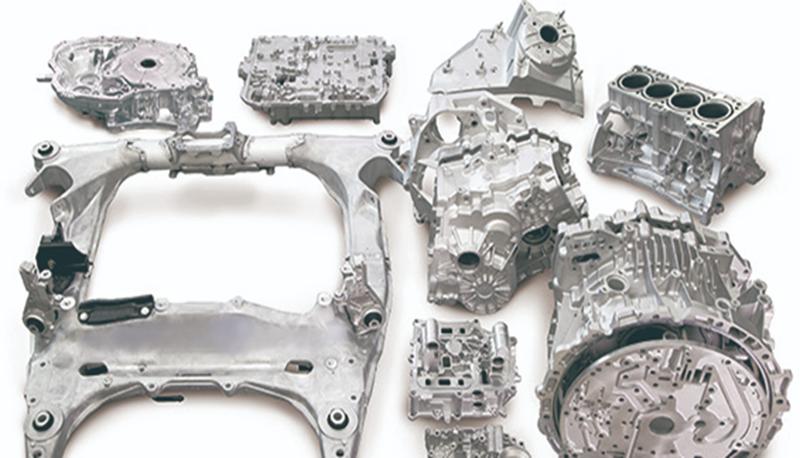
Automotive die castings include:
- Engine and transmission housings
- Motor and gearbox enclosures
- Brackets and mounting supports
- Electronic control unit housings
- Battery-related enclosures
- Structural and chassis components
- Pump and compressor housings
- Interior and exterior hardware
The specific application depends on the component’s design, material requirements, operating conditions, and safety considerations.
How the Automotive Die Casting Process Works
Die casting involves several production stages. Each stage must be carefully controlled to ensure that the finished automotive component meets its required specifications.
1. Die Design and Preparation
The process begins with designing a steel mold based on the component’s geometry and dimensional requirements.
The die contains a cavity that determines the final shape of the part. It may also include gates, runners, vents, cooling channels, and ejector mechanisms. Before production, the mold is cleaned, inspected, and brought to an appropriate operating temperature.
2. Melting the Metal
The selected alloy is heated in a furnace until it reaches the required molten condition.
Temperature and material composition must be controlled because they influence metal flow, solidification, and final component properties. Proper melt treatment can also help reduce impurities and gas-related defects.
3. Injecting Molten Metal
In high-pressure die casting, molten metal is injected into the mold cavity at high speed and pressure.
The pressure helps the metal fill detailed sections of the die before solidification begins. This makes the process suitable for producing components with relatively thin walls, intricate features, and consistent shapes.
4. Cooling and Solidification
Once the mold is filled, the molten metal cools and solidifies.
Cooling channels and controlled die temperatures help manage the solidification process. Appropriate cooling is important for limiting defects and maintaining dimensional stability.
5. Ejection and Trimming
After the metal has solidified sufficiently, the die opens and ejector pins release the casting.
Excess material from the gating and overflow systems is removed through trimming. The component may then undergo cleaning, deburring, or other preparation operations.
6. Machining and Quality Inspection
Some automotive castings require additional machining to achieve precise holes, threads, sealing surfaces, or assembly interfaces.
Inspection may include dimensional measurement, visual examination, leak testing, hardness checks, and non-destructive testing where appropriate. These checks help confirm that the component meets its engineering and performance requirements.
Why Die Cast Car Parts Are Important in Modern Vehicles
Die casting offers several advantages that make it valuable for automotive component manufacturing.
1. Lightweight Construction
Reducing vehicle weight is an important objective for automotive manufacturers.
Aluminum and magnesium die castings can replace heavier materials in suitable applications. Lower component weight may help improve fuel efficiency in conventional vehicles and support driving range in electric vehicles, depending on the overall vehicle design.
2. High Dimensional Accuracy
Automotive components often need to fit precisely within complex assemblies.
Die casting uses accurately engineered molds to produce repeatable shapes and dimensions. This can simplify assembly and reduce the need for extensive machining, although critical features may still require finishing operations.
3. Complex Component Geometry
Modern vehicles contain parts with detailed shapes, mounting points, internal passages, and integrated features.
Die casting can produce many of these design elements in a single component. This may reduce the number of separate parts required and simplify manufacturing and assembly.
4. Efficient High-Volume Production
Automotive manufacturers often require large quantities of identical components.
Once the die and production settings are established, die casting can support repeatable production cycles. This makes it suitable for medium- and high-volume manufacturing programs where tooling investment can be justified.
5. Good Surface Finish
Die-cast components can achieve relatively smooth surfaces directly from the mold.
This can reduce finishing requirements and support the production of housings and visible components. Additional processes such as painting, powder coating, polishing, or machining may be used when specific appearance or functional requirements apply.
6. Thermal Performance
Aluminum alloys offer good thermal conductivity, which is useful for components that need to transfer or dissipate heat.
Applications may include motor housings, electronic enclosures, heat sinks, and selected powertrain components.
Common Applications of Die Cast Car Parts
Die casting supports the production of components used throughout different vehicle systems.
Engine Components
Internal combustion engine systems contain components that must withstand heat, vibration, and mechanical loads.
Die-cast aluminum parts may be used for selected engine covers, housings, brackets, and related components. Their suitability depends on the operating temperature, required strength, and specific alloy properties.
Transmission and Gearbox Housings
Transmission systems require housings that support internal gears, shafts, bearings, and lubrication arrangements.
Die-cast aluminum housings can provide the necessary geometry while helping reduce weight. Precision machining may be required for bearing seats, mounting surfaces, and other critical interfaces.
Chassis and Structural Components
Selected automotive brackets, supports, and structural components can be manufactured through die casting.
Some modern vehicle platforms use large aluminum castings to consolidate multiple smaller components. These designs require careful engineering and strict quality control because structural performance and crash behavior are critical.
Electric Motor Housings
Electric vehicles rely on motors that convert electrical energy into mechanical power.
Aluminum die castings are used in suitable motor housings because they combine relatively low weight with useful thermal conductivity and design flexibility.
Battery and Electrical System Enclosures
Electric vehicles contain battery systems, inverters, control units, and other electrical equipment that require protective housings.
Die-cast aluminum components can provide rigid enclosures and integrated mounting or heat-management features. Battery-related parts must also meet the relevant sealing, electrical insulation, thermal, and safety requirements.
Interior and Exterior Components
Certain interior and exterior automotive components require detailed shapes and consistent appearance.
Die casting can be used for selected handles, brackets, mounting elements, decorative hardware, and other parts, depending on the material and design requirements.
The Role of Die Casting in Electric Vehicle Manufacturing
Electric vehicle development has increased demand for lightweight metal components and integrated manufacturing solutions.
Lightweight Battery System Components
Battery packs contribute significantly to an electric vehicle’s total weight.
Suitable die-cast aluminum components can be used in selected battery enclosures, supports, and structural elements. Their design must account for mechanical protection, thermal management, sealing, and vehicle safety requirements.
Electric Motor and Inverter Housings
Motors and inverters generate heat during operation and require protective enclosures.
Aluminum die casting can provide complex housing geometries and features that support component mounting and thermal management.
Integrated Structural Designs
Some electric vehicle platforms use large cast components to consolidate multiple smaller parts.
This approach can reduce part count and simplify certain assembly operations. However, large structural castings require sophisticated tooling, material control, process monitoring, and inspection.
Support for Energy Efficiency
Reducing the mass of suitable vehicle components can contribute to lower energy consumption.
For electric vehicles, weight reduction may help support driving range, although the actual benefit depends on vehicle architecture, battery capacity, aerodynamics, and operating conditions.
Materials Commonly Used for Automotive Die Casting
The selected material influences a component’s weight, strength, corrosion resistance, and manufacturing behavior.
Aluminum Alloys
Aluminum is widely used in automotive die casting because it combines relatively low density with useful mechanical properties and thermal conductivity.
It is suitable for housings, covers, brackets, and many other automotive components. Different aluminum alloys offer different levels of strength, ductility, corrosion resistance, and castability.
Magnesium Alloys
Magnesium is lighter than aluminum and can be useful in applications where reducing mass is especially important.
It may be used for selected housings, supports, and interior components. Its use requires careful consideration of corrosion protection, mechanical properties, and manufacturing conditions.
Zinc Alloys
Zinc alloys are suitable for certain smaller automotive components that require detailed shapes and good surface characteristics.
Applications may include selected hardware, connectors, and functional fittings. Their higher density compared with aluminum makes them less suitable where substantial weight reduction is the main objective.
Common Quality Challenges in Automotive Die Casting
Automotive components often operate under demanding conditions, so casting defects must be identified and controlled.
Porosity
Porosity consists of small cavities inside a casting. It can result from trapped gas or shrinkage during solidification.
Optimized injection conditions, suitable venting, and proper melt treatment can help reduce porosity. Pressure-bearing or leak-sensitive components may require additional testing.
Incomplete Filling
Incomplete filling occurs when molten metal does not reach every section of the mold cavity.
Incorrect metal temperature, injection speed, or mold conditions can contribute to this problem. Process adjustments and improved gating design help support complete filling.
Cold Shuts
Cold shuts occur when separate streams of molten metal meet but do not fuse properly.
Controlling metal temperature, flow patterns, and injection conditions can help minimize this defect.
Dimensional Variation
Changes in die temperature, cooling conditions, tooling wear, and machine settings can affect component dimensions.
Routine dimensional checks and process monitoring help maintain consistency across production batches.
Surface Defects
Surface imperfections may include flow marks, blisters, cracks, and irregularities.
Clean molten metal, appropriate die coatings, stable temperatures, and proper maintenance contribute to improved surface quality.
Die Casting Compared With Other Automotive Manufacturing Methods
Automotive engineers select manufacturing processes according to component geometry, production volume, mechanical requirements, and cost.
Die Casting vs. Sand Casting
Sand casting uses expendable sand molds, while die casting generally uses reusable metal tooling.
Die casting is often more suitable for repeatable production of relatively detailed components with good dimensional consistency. Sand casting offers flexibility for larger components and lower-volume projects.
Die Casting vs. CNC Machining
CNC machining removes material from a solid workpiece to create the required shape.
It is useful for prototypes, low-volume production, and precise features. Die casting can produce near-net-shape components more efficiently at higher volumes, with machining used afterward where tighter tolerances are necessary.
Die Casting vs. Forging
Forging shapes metal through compressive forces and can provide favorable mechanical properties for parts exposed to demanding loads.
Die casting is often preferred for complex shapes and integrated features. Forging may be more suitable for certain high-strength components where specific mechanical performance is essential.
How to Choose a Reliable Automotive Die Casting Manufacturer
Selecting the right manufacturing partner is important for maintaining component quality, production efficiency, and delivery reliability.
Consider these factors when evaluating a supplier:
- Industry experience: Review the manufacturer’s experience with automotive components and relevant alloy systems.
- Engineering and tooling capabilities: Look for expertise in mold design, product development, and manufacturability assessment.
- Production equipment: Confirm that the available die casting machines can accommodate the component’s size and technical requirements.
- Quality management: Ask about inspection procedures, process monitoring, traceability, and applicable quality certifications.
- Secondary operations: Determine whether machining, trimming, surface treatment, and assembly support are available.
- Testing capabilities: Check whether the manufacturer can perform suitable dimensional, mechanical, leak, and non-destructive testing.
- Production capacity: Ensure that the supplier can support the expected order quantities and delivery schedule.
A capable supplier should also be able to identify potential design and manufacturing issues before production begins.
Conclusion
Die cast car parts are essential to modern automotive manufacturing because they offer a practical combination of lightweight construction, dimensional consistency, complex geometry, and efficient production. From engine housings and transmission cases to electric motor enclosures and battery-related components, die casting supports many of the systems used in today’s vehicles.
The process is particularly valuable when manufacturers need repeatable components at medium or high production volumes. However, successful results depend on appropriate alloy selection, precision tooling, controlled casting conditions, and reliable quality inspection.
As automotive technology continues to advance, die casting will remain an important manufacturing method for developing efficient, durable, and precisely engineered vehicle components.