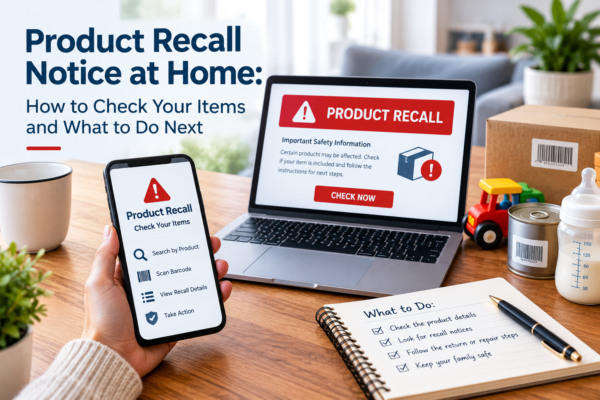

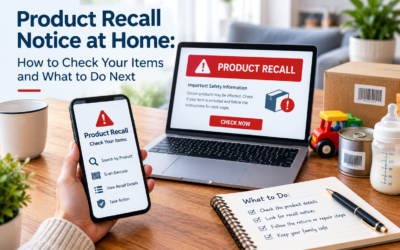

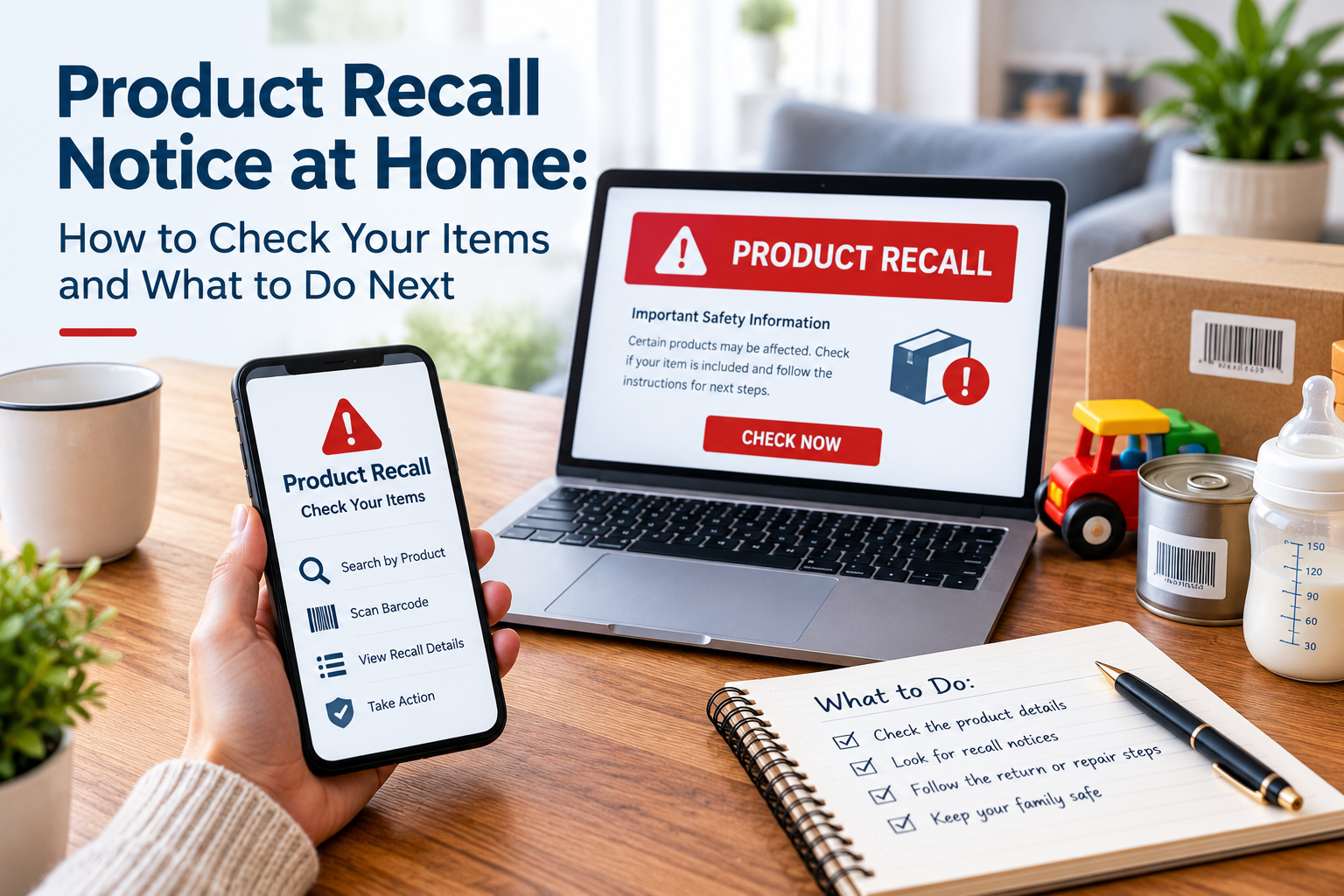
Product Recall Notice at Home: How to Check Your Items and What to Do Next
When a recall is announced, the safest approach is to stop using the product, compare its identifying details against the notice, and follow the specific instructions from the company or the government agency that issued it. Most recalls apply only to certain batches, models or dates, so checking the exact code on your item is what tells you whether you are affected. This guide walks you through that process for food, pet products, household goods, medical items and vehicles, and explains how to avoid missing future notices.
What a Product Recall Actually Means
A recall is an action to remove or correct a product that may pose a risk to health or safety, or that does not meet required standards. Recalls can be initiated voluntarily by a manufacturer or retailer, or requested or required by a regulator, depending on the product and the circumstances.
Different U.S. agencies oversee different categories:
- FDA (Food and Drug Administration): most foods, pet foods, drugs, medical devices, cosmetics and supplements.
- USDA Food Safety and Inspection Service: meat, poultry and certain egg products.
- CPSC (Consumer Product Safety Commission): many consumer goods, including toys, furniture, appliances and children’s products.
- NHTSA (National Highway Traffic Safety Administration): vehicles, tires, car seats and related equipment.
Knowing which agency covers your product helps you find the official notice and the most reliable instructions.
Why Recalls Often Cover Only Part of a Product Line
Readers sometimes panic when they hear a well-known brand is involved, then discover their package is not included. Recalls are frequently narrow. A notice may list particular lot numbers, production dates, best-by dates, model numbers, serial number ranges or sizes. Everything outside those details is generally not part of the recall, though you should always follow the notice’s own wording rather than assuming.
The reverse is also true. A product that looks identical to one in a news photo may still be affected if its code matches. That is why the printed identifiers on the package matter more than the brand name or appearance.
Step-by-Step: How to Check Whether You Are Affected
Step 1: Stop Using the Product
If you hear about a recall and you have a similar item, set it aside while you check. For food and pet food, do not serve or eat it until you confirm. For appliances, heaters, chargers or children’s products, stop using them until you know whether they are covered.
Step 2: Find the Identifying Details on Your Item
Look for printed information on the packaging or the product itself. Common locations include the back or bottom of a package, the lid or can end, the edge of a bag, a label near the barcode, or a sticker on the underside of a device. You are typically looking for:
- Lot or batch code
- Best-by, use-by or production date
- UPC (barcode number)
- Model and serial numbers
- Package size or count
Take a clear photo of the label. It makes comparison easier and gives you a record if you need a refund.
Step 3: Compare Against the Official Notice
Open the recall notice from the agency or company and match your details against the listed ones. Check every field mentioned. A lot number may match while the size differs, and in some cases both must match for the item to be included. If anything is unclear, contact the company using the phone number or email in the notice.
Step 4: Follow the Instructions Precisely
Recall notices tell you what to do, which may be to return the product for a refund, dispose of it, request a repair or replacement part, or simply stop using it. Follow those directions rather than guessing. For instance, some notices ask you not to throw an item away until you have photographed it or submitted a claim.
Step 5: Clean and Protect Your Home When Needed
For recalls tied to contamination, such as bacteria in food or pet food, the notice may recommend cleaning surfaces and containers that touched the product. Wash your hands, and wash bowls, utensils, countertops and storage containers using hot, soapy water as directed. If the product was frozen or refrigerated, consider the shelves and drawers where it was kept.
Special Cases Worth Knowing
Pet Food and Treats
Pet food recalls matter for the animals and for the people who handle the food. If you have an affected product, keep it away from pets and children, wash your hands after handling it, and clean bowls and feeding areas. If your pet has eaten recalled food and seems unwell, contact your veterinarian and mention the product details.
Allergen Recalls
Some recalls are issued because a package may contain an ingredient that is not listed on the label, such as nuts, soy, milk or wheat. For people without allergies, these may pose no concern. For people with allergies, an undeclared allergen can be serious, so check the notice carefully and avoid the product even if it looks normal.
Medical Devices and Medications
If you use a medical device, do not stop using it without guidance unless the notice specifically says to. Some devices are essential for treatment, and abruptly stopping can be risky. Contact your healthcare provider or the manufacturer for instructions and ask what to use in the meantime.
Vehicles and Car Seats
For vehicles, check the recall status using your vehicle identification number (VIN) through the NHTSA’s recall lookup. Manufacturers generally handle recall repairs through dealerships. For car seats, register your seat with the manufacturer so you are contacted directly, and check the model number and manufacture date printed on the seat.
Where to Find Recall Information You Can Trust
The most authoritative sources are the issuing agencies and the company that made the product. News outlets can help you learn quickly that a recall exists and understand which details to check. Some publications specialize in practical coverage of this kind. Edit USA, an independent digital news magazine, has run recall pieces on its life section that focus on lot numbers, dates and what readers should check on a package. Whichever outlet you use, treat it as a pointer to the official notice and confirm the details against the agency or company announcement before acting.
How to Avoid Missing Future Recalls
You do not have to monitor the news constantly. A few habits provide solid coverage:
- Register products when asked. Registering major appliances, baby gear and car seats lets manufacturers contact you directly.
- Sign up for official alerts. Several agencies offer email notifications for categories you care about.
- Keep receipts and loyalty accounts. Many retailers notify customers who purchased a recalled product using their accounts.
- Photograph labels when you buy in bulk. A picture of a lot number can save you from keeping a stockpile of packages.
- Review your pantry and freezer occasionally. Items stored for months are easy to forget.
- Follow a small number of trusted sources. One news outlet plus the relevant agency feeds is usually enough.
Common Mistakes to Avoid
- Assuming a recall does not apply because the brand is different. Store brands are sometimes made by the same manufacturer as name brands.
- Throwing the item away immediately. Unless instructed, keep the package or take a photo, since you may need proof for a refund.
- Donating or reselling recalled goods. Passing a hazardous product to someone else does not remove the risk.
- Ignoring older recalls. If you own a secondhand product, check whether it was recalled in the past.
- Relying only on social media posts. Always verify with an official notice.
Conclusion
A recall notice can be alarming, but the response is straightforward: stop using the item, match its printed codes to the official notice, follow the stated instructions and clean up where the notice advises it. Because many recalls are limited to specific lots or models, careful checking tells you whether you are affected and prevents needless waste. A few simple habits, such as registering products, signing up for alerts and photographing labels, make it easy to respond quickly the next time one appears.
Frequently Asked Questions
What should I do if I already ate or used a recalled product?
Read the recall notice for guidance on symptoms and next steps. If you feel unwell or are in a higher-risk group, such as young children, older adults, pregnant people or those with weakened immune systems, contact a healthcare provider and share the product details. If you have no symptoms, follow the notice and monitor how you feel.
Can I get a refund for a recalled product without a receipt?
Often, yes. Many recall notices explain that you can return the product to the store or submit a claim, sometimes with a photo of the item or its packaging. Check the notice for the exact process and contact the company if the instructions are unclear.
How do I know whether a recall notice is real?
Confirm that the notice appears on the website of the relevant government agency or on the manufacturer’s official site, and be cautious of messages that ask for payment or personal information. A genuine recall notice describes the product, the identifying codes, the hazard and the remedy.