



Powder Metallurgy Products: Types, Benefits, and Industrial Applications
Powder metallurgy is used to manufacture a broad range of metal components for products that require consistent dimensions, functional properties, and efficient production. Instead of shaping every component from solid metal stock, the process uses prepared metal powders that are compacted and heated to create a bonded structure. This manufacturing approach can support parts with varied geometries and material requirements, particularly when production quantities justify dedicated tooling.
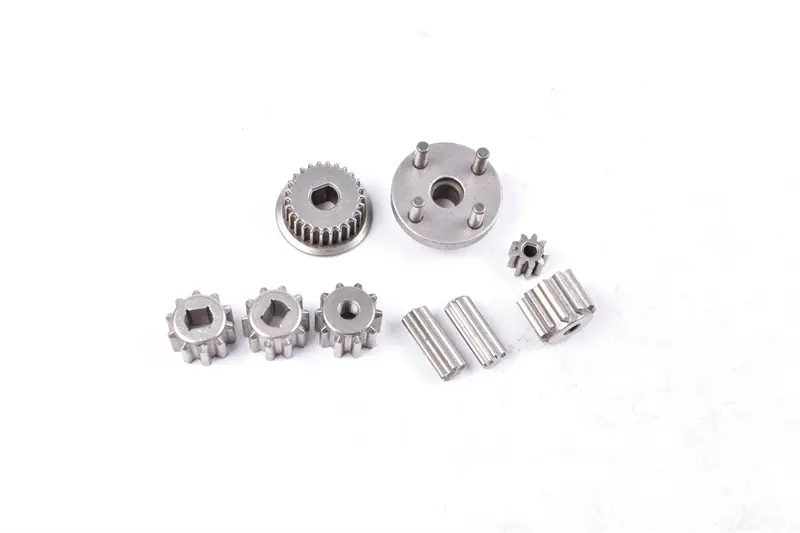
The range of Powder Metallurgy Products includes components designed for motion transfer, shaft support, filtration, structural functions, and other industrial purposes. Their suitability depends on the powder composition, forming method, sintering conditions, and any finishing operations. Understanding the different product categories helps buyers identify which designs may benefit from this manufacturing route.
Components for mechanical movement
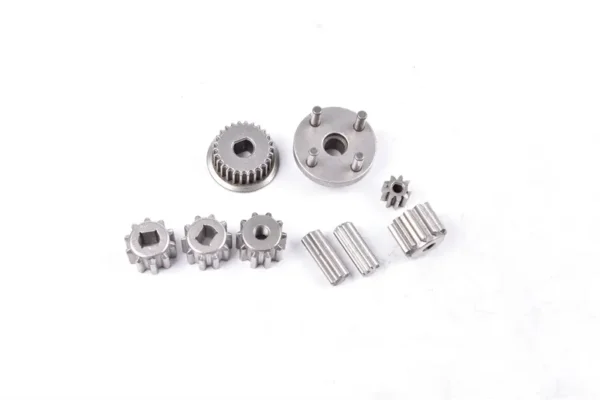
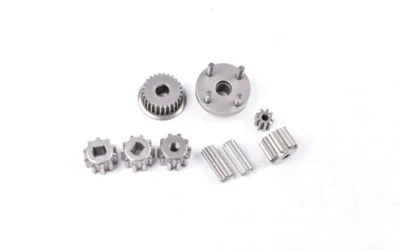
Gears are among the recognizable products made through powder metallurgy. They transfer motion and torque within compact drive systems used in vehicles, appliances, power tools, and industrial equipment. Powder compaction can form much of the gear geometry, while sizing, machining, or heat treatment may be used when the application requires additional accuracy or strength.
Bushings and bearings are another important category. These components support shafts and manage friction between moving surfaces. Some sintered bearings are intentionally porous and impregnated with oil, allowing them to retain lubricant within the material. Their performance depends on shaft finish, clearance, load, speed, and operating temperature.
Other mechanical products may include sprockets, pulleys, structural elements, and specially shaped components. Each design must be assessed according to its loading conditions and the practical limits of compaction.
Porous products for filtration and fluid control
Powder metallurgy can also produce components in which porosity is a functional requirement. Sintered metal filters contain interconnected pores that allow liquid or gas to pass through while retaining particles according to the filter’s design.
These products may be used in chemical processing, gas handling, water treatment, and industrial equipment. Material selection is important because the filter must withstand the fluid chemistry, temperature, pressure, and cleaning procedures involved.
The pore structure needs to balance filtration performance with permeability and mechanical strength. A filter designed for fine particle retention may have different flow characteristics from one intended for higher throughput. Buyers should therefore review the complete operating specification rather than select a product solely by its nominal filtration rating.
Materials and manufacturing methods
Iron-based powders are commonly used for structural components, while bronze, stainless steel, and other metal compositions may be selected for different requirements. The material affects strength, wear resistance, corrosion behavior, density, and other characteristics.
Conventional powder metallurgy typically involves powder preparation, die filling, compaction, and sintering. Secondary operations can include sizing, machining, heat treatment, impregnation, and surface finishing. The exact route depends on the geometry and performance requirements.
Metal injection molding is another powder-based process, particularly useful for smaller components with complex shapes. It combines fine metal powder with a binder to create a feedstock that can be molded before binder removal and sintering. Although related to powder metallurgy, it has distinct tooling and process considerations.
Benefits for manufacturers
Near-net-shape forming can reduce material removal compared with machining a component from solid stock. This can improve material utilization and reduce the number of production steps for suitable designs.
The process can also support repeatable manufacturing. Once tooling and parameters are established, production can deliver consistent components in quantities suited to the manufacturing setup. Integrated features may reduce the need for separate parts or assembly operations.
However, tooling investment and design feasibility must be evaluated. Powder metallurgy is not necessarily economical for every size, shape, or order quantity. Some applications may require secondary machining or alternative processes to achieve their specifications.
Applications across industries
Powder metallurgy products are used in automotive systems, household appliances, electric motors, industrial machinery, power tools, office equipment, pumps, and filtration assemblies. The specific component depends on the functional requirements of the product.
Automotive manufacturers may use powder metal gears or structural components in selected mechanisms. Appliance producers may incorporate sintered bearings in motors and fans. Industrial operators may use porous metal filters in fluid or gas systems. The common factor is the need for a component whose manufacturing route can meet the required performance and production economics.
How buyers should assess suppliers
Purchasers should provide drawings, material requirements, tolerances, annual quantities, and operating conditions. Suppliers should explain their manufacturing capabilities, tooling approach, inspection methods, and secondary-processing options.
Samples and technical documentation can help confirm whether a proposed product meets the intended application. Quality planning should define critical dimensions, material verification, testing, and change control before regular production begins.
Choosing products by function, not category alone
Powder metallurgy covers several distinct product types, each with its own design and performance considerations. The best choice depends on what the component must do, how it will operate, and how many units are needed. Matching those requirements with an appropriate material and process helps manufacturers gain the benefits of powder metallurgy without overlooking its limitations.