






How to Choose the Right Conveying Equipment for Heavy-Duty Industrial Material Handling
Heavy-duty industrial operations depend on reliable material handling systems to move large quantities of raw materials, intermediate products, and finished goods. Industries such as mining, cement manufacturing, steel production, agriculture, and chemical processing require equipment capable of handling demanding workloads while maintaining consistent performance. Selecting the right conveying solution is essential for improving productivity, reducing operational interruptions, and controlling long-term costs.
With different technologies and configurations available, choosing suitable Conveying Equipment requires careful consideration of material characteristics, transportation distance, required capacity, and working conditions. A well-designed system can streamline material movement, reduce manual handling, and improve coordination between different production stages.
Understanding the Importance of Industrial Conveying Systems
Industrial conveying systems are designed to transport materials from one location to another through mechanical, pneumatic, or other specialized methods. They connect different stages of production and help maintain a continuous flow of materials throughout industrial facilities.
In heavy-duty environments, conveying equipment must withstand substantial loads, abrasive materials, continuous operation, and challenging environmental conditions.
The right system can help businesses reduce unnecessary material transfers, improve workplace organization, and maintain stable production schedules.
Common Types of Heavy-Duty Conveying Equipment
Understanding the available conveyor technologies is the first step toward selecting an appropriate system.
1. Belt Conveyors
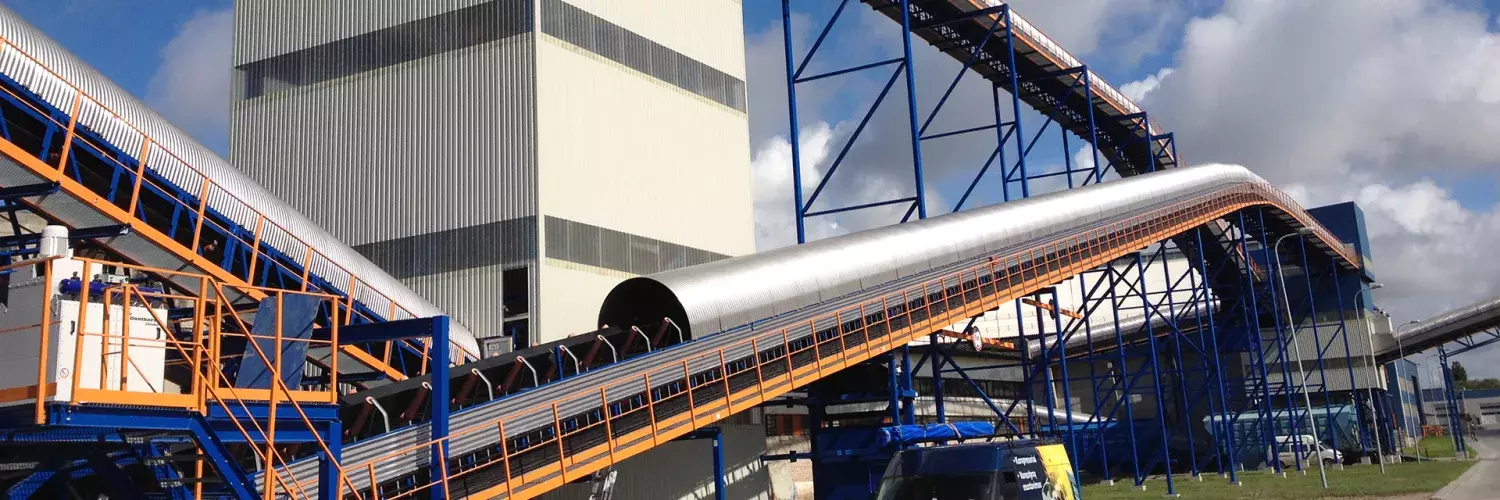
Belt conveyors are widely used for transporting bulk materials over short or long distances. They consist of a continuous moving belt supported by rollers and driven by motorized pulleys.
They are commonly used in mining, construction, cement production, and material processing facilities.
Key advantages include:
- Continuous transportation of large material volumes.
- Suitability for horizontal and inclined movement within design limits.
- Flexibility in conveyor length and configuration.
- Efficient integration with automated production lines.
2. Screw Conveyors
Screw conveyors use a rotating helical screw to move materials through a trough or enclosed housing.
They are particularly suitable for powders, granules, cement, grain, and other materials that require controlled transportation.
Their compact construction makes them useful in facilities where installation space is limited.
3. Bucket Elevators
Bucket elevators are designed to transport bulk materials vertically or at steep inclines.
They use a series of buckets attached to a belt or chain to lift materials from a lower loading point to an elevated discharge location.
These systems are commonly found in grain processing plants, cement factories, fertilizer facilities, and storage terminals.
4. Roller Conveyors
Roller conveyors use a series of rotating rollers to move packaged goods, containers, pallets, and other unit loads.
Depending on the application, they may operate through gravity or powered drive mechanisms.
They are frequently used in warehouses, distribution centers, manufacturing facilities, and assembly operations.
5. Chain Conveyors
Chain conveyors use industrial chains to transport heavy products or bulk materials through demanding operating environments.
Their robust construction makes them suitable for applications involving high loads, elevated temperatures, or challenging material conditions.
They are commonly used in steel production, automotive manufacturing, and heavy industrial processing.
Key Factors to Consider When Selecting Conveying Equipment
Choosing the right conveyor involves evaluating several technical and operational requirements.
1. Material Characteristics
The properties of the material being transported have a direct influence on equipment selection.
Important characteristics include:
- Particle size and shape.
- Bulk density and total material weight.
- Moisture content and flowability.
- Abrasiveness and corrosiveness.
- Temperature and chemical properties.
- Dust generation and contamination sensitivity.
For example, abrasive minerals may require wear-resistant conveyor components, while fine powders may benefit from enclosed screw or pneumatic conveying systems.
Understanding material behavior helps prevent blockages, excessive wear, and unnecessary maintenance.
2. Required Load Capacity
The conveying system must accommodate the expected material volume without creating production bottlenecks.
Capacity requirements are generally evaluated in terms of weight or volume transported per hour.
When determining the appropriate capacity, businesses should consider current production demand, peak operating conditions, and possible future expansion.
Selecting equipment with insufficient capacity can restrict production, while excessive capacity may increase initial investment and energy consumption.
3. Transportation Distance and Layout
The distance between loading and discharge points influences the type of conveying technology required.
Belt conveyors are often suitable for long-distance transportation, while screw conveyors are commonly used for controlled movement across shorter distances.
Vertical transportation may require bucket elevators or specially designed inclined systems.
The installation layout should also account for available floor space, structural supports, access points, and connections with existing machinery.
4. Operating Environment
Heavy-duty conveying systems frequently operate in environments exposed to dust, moisture, heat, vibration, and corrosive substances.
Equipment should be designed to withstand the conditions of the facility.
For outdoor applications, weather-resistant materials and protective coatings may be necessary. In dusty industrial environments, sealed components and appropriate dust collection arrangements can improve reliability.
Temperature-resistant components may also be required when transporting hot materials.
5. Energy Efficiency
Energy consumption can represent a significant portion of the long-term cost of industrial material handling.
Modern conveying systems can incorporate efficient motors, variable-frequency drives, optimized mechanical components, and suitable control systems.
These technologies allow equipment to operate according to actual material handling requirements rather than continuously running at maximum capacity.
Proper system sizing is equally important because oversized or poorly configured equipment can consume unnecessary energy.
6. Maintenance Requirements and Equipment Durability
Heavy-duty operations place considerable stress on conveyor components. Continuous loading, friction, vibration, and material abrasion can gradually affect equipment performance.
Before selecting a system, businesses should evaluate:
- Expected component service life.
- Availability of replacement parts.
- Ease of inspection and maintenance.
- Bearing and drive system reliability.
- Wear resistance of material-contact surfaces.
- Availability of technical support.
Equipment with accessible maintenance points and durable construction can help reduce repair time and improve operational availability.
The Role of Automation in Modern Conveying Systems
Automation has become an important feature of industrial material handling. Advanced conveyor systems can integrate sensors, programmable controllers, and centralized monitoring technologies.
These features help operators monitor equipment conditions and coordinate material movement across multiple production stages.
Common automation features include:
Variable-speed control: Adjusts conveyor speed according to production requirements and material flow.
Belt monitoring: Detects misalignment, slipping, or abnormal operating conditions.
Load monitoring: Helps identify overloading and maintain appropriate operating conditions.
Automated shutdown systems: Stop equipment when certain faults or unsafe conditions are detected.
Remote monitoring: Allows operators to supervise equipment performance from centralized control stations.
Automation can improve consistency and support preventive maintenance, although the level of technology should match the complexity and needs of the facility.
Safety Considerations in Heavy-Duty Material Handling
Industrial conveyors contain moving belts, rotating shafts, chains, pulleys, and other mechanical components that can create workplace hazards.
A suitable conveying system should incorporate appropriate safety features, including:
- Emergency stop mechanisms.
- Protective guards around moving components.
- Belt misalignment and overload protection.
- Safe maintenance access platforms.
- Warning signals and operational indicators.
- Clearly defined inspection procedures.
Employees should receive proper training on equipment operation, emergency procedures, and safe maintenance practices.
Lockout and tagout procedures should also be followed when performing maintenance or repairs to prevent unexpected equipment startup.
Benefits of Selecting the Right Conveying System
Choosing equipment that matches operational requirements can provide several long-term advantages.
Improved Production Efficiency
A properly designed conveying system creates a more consistent flow of materials between production stages. This reduces unnecessary handling and helps prevent delays caused by material transportation bottlenecks.
Reduced Labor Requirements
Automated material movement reduces dependence on manual transportation and repetitive handling tasks.
This allows employees to focus on equipment monitoring, quality control, and other productive activities.
Lower Operating Costs
Appropriately selected equipment can reduce energy consumption, material spillage, maintenance expenses, and unplanned downtime.
Over time, these improvements can contribute to a lower total cost of ownership.
Better Workplace Organization
Conveying systems provide structured material transportation routes, helping facilities maintain cleaner and more organized production environments.
Enclosed systems can also help control dust and minimize material exposure where required.
Common Mistakes to Avoid When Choosing Industrial Conveyors
Even experienced industrial operators can encounter problems when equipment selection is based on incomplete information.
Some common mistakes include:
- Ignoring material properties: Selecting a conveyor without considering particle size, moisture, or abrasiveness can result in poor performance.
- Underestimating capacity requirements: Equipment that cannot handle peak production demand may create persistent bottlenecks.
- Overlooking installation conditions: Limited space, structural restrictions, and discharge height can affect system compatibility.
- Focusing only on initial cost: Lower purchase prices may lead to higher maintenance and operating expenses over time.
- Neglecting future requirements: A system without sufficient flexibility may become unsuitable as production capacity increases.
A detailed technical assessment helps businesses avoid these issues and make more informed investment decisions.
Conclusion
Selecting the right conveying equipment is essential for maintaining efficient and reliable heavy-duty industrial material handling operations. Material characteristics, load capacity, transportation distance, environmental conditions, energy consumption, and maintenance requirements all influence equipment performance.
By evaluating these factors carefully, businesses can choose systems that support continuous material movement, reduce unnecessary operating expenses, and improve workplace safety.
Combining suitable conveyor technology with effective automation and preventive maintenance also helps industrial facilities maintain long-term productivity while adapting to changing production requirements.